MyPortugalHoliday.com
The best independent guide to Portugal
MyPortugalHoliday.com
The best independent guide to Portugal
Where to go in Portugal? A guide to the best towns, cities and regions of Portugal
Portugal is a small country that keeps asking you to make hard choices. Do you head south to the Algarve's golden beaches, or north to the wild Atlantic coast where winter waves can break at thirty metres? Do you base yourself in Lisbon with its seven hills and rattling yellow trams, or in Porto with its Port wine cellars stacked above the Douro? Inland, the country opens out into rolling plains of cork and olive groves, walled hilltop towns, granite mountains, and vineyards that have been worked the same way for centuries. Few countries of this size offer such variety, and very few visitors see even half of it on a first trip.
The shape of your holiday depends almost entirely on which of these Portugals you choose. A week in the central Algarve is a completely different trip from a week in the Alentejo, which in turn is nothing like a week spent driving the Douro Valley or exploring the fishing villages of the western coast. Each region has its own pace, its own landscape, its own cuisine, and its own best time of year to visit. Choosing the right one for the kind of holiday you have in mind is the single most important decision you will make, and it is the one most guidebooks gloss over.
I have been exploring Portugal since 2001 and, together with my Portuguese wife, have travelled the country from the Minho in the far north to the Algarve in the south, and everywhere in between. Drawing on those two decades of first-hand experience, this guide will walk you through each of Portugal's main regions, the towns and cities worth your time within them, and help you decide where to go for the trip you actually want to take.
Related articles: Portugal’s best beach - Top 10 Portugal
The best towns and cities of Portugal
The interactive map below is the fastest way to get your bearings. I have plotted thirty of Portugal's most worthwhile destinations across three categories, so you can see at a glance where the main cities sit, which stretches of coast hold the best beach resorts, and where to find the quieter towns that reward a longer trip.
The yellow pins mark the 10 best beach resorts in Portugal. The green pins show the 10 best cities and towns. The blue markers are my 10 personal favourites: the lesser-known destinations that rarely appear on a first-time itinerary but, to my mind, give you the truest sense of the country.
Best beach resorts (yellow): 1) Cascais 2) Tavira 3) Albufeira 4) Nazaré 5) Sesimbra 6) Costa Nova 7) Tróia 8) Póvoa de Varzim b Praia da Rocha 10) Ericeira
Best cities and towns (green): 1) Lisbon 2) Porto 3) Coimbra 4) Sintra 5) Lagos 6) Evora 7) Faro 8) Setubal 9) Braga b Bragança
My personal favourites (blue): 1) Viana do Castelo 2) Vila Nova de Milfontes 3) Guimarães 4) Elvas 5) Lamego 6) Tomar 7) Óbidos 8) Vila Real de Santo António 9) Ponte de Lima 10) Silves
Where to go in Portugal?
The sections that follow walk through each of Portugal's main tourist regions, what I think is worth your time in each, and which destinations suit which kind of trip. I have kept the advice practical rather than exhaustive, since the detail sits in the individual guides linked throughout.
The Algarve
The Algarve is the 150km stretch of southern coastline that most visitors to Portugal have heard of long before anywhere else in the country, and for good reason. This is where the package holiday industry arrived in the 1960s and never left, and it still draws more summer visitors than anywhere else in Portugal. The formula is straightforward and it works: reliable sunshine from April to October, cliff-backed beaches of fine golden sand, and resort towns geared around making a family holiday as easy as possible.
It helps to think of the Algarve in three parts. The central Algarve, running roughly from Lagos to Vilamoura, is where most of the big-name resort towns cluster and where most package holidays land. The eastern Algarve, beyond Faro and stretching to the Spanish border, is calmer, more traditionally Portuguese, and considerably less developed. The western Algarve, beyond Lagos, turns wilder and more dramatic, with Atlantic-facing beaches that attract surfers and travellers who want a more rugged coastline. The section you choose shapes the kind of holiday you will have more than almost any other decision.
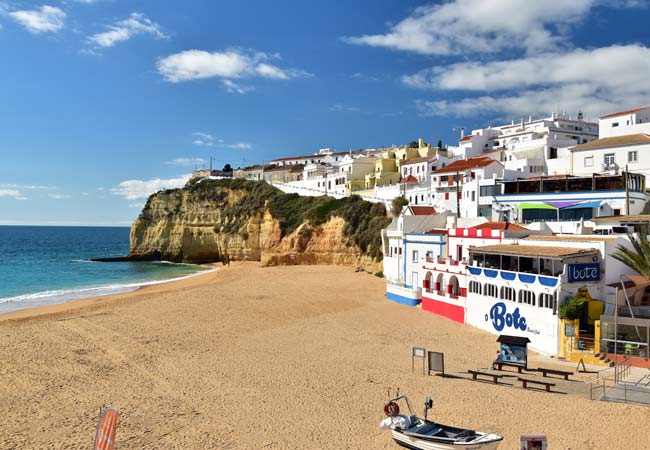
Carvoeiro is a pretty beach town and ideal for families
The larger resorts each have their own character. Albufeira is the loudest and liveliest, split between a pretty whitewashed old town and the neon-lit 'Strip' of bars and clubs. It is the most popular resort in the country and the obvious choice if you want nightlife alongside your beaches. Lagos draws a younger crowd and a long-standing backpacker scene, set against the spectacular limestone cliffs of the Ponta da Piedade, and is my own favourite of the larger towns. Praia da Rocha is pure beach-resort, with a wide promenade of high-rise hotels facing one of the finest beaches in the country. Vilamoura is the purpose-built, manicured option, set around a marina lined with yachts and geared towards golf and polished waterfront dining.
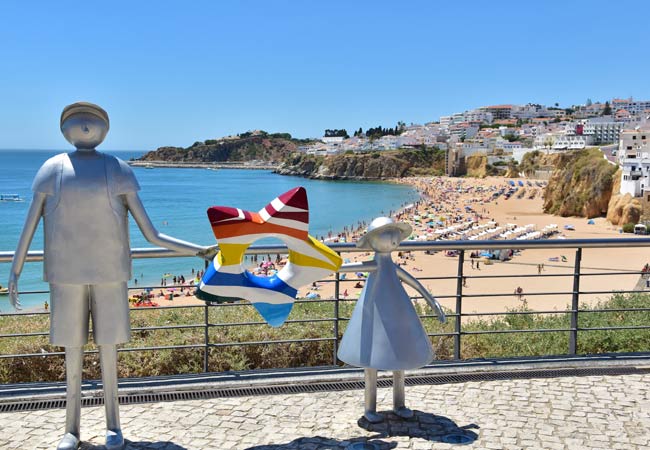
Albufeira and its glorious sandy beach
For families wanting something calmer, I would point you towards the smaller towns of Carvoeiro, Alvor, Praia da Luz, or Olhos de Água. All four keep the Algarve's appeal while turning the volume down, and they work particularly well if your children are still young enough that 'action-packed' is not yet the goal. My sister stayed in Praia da Luz with a one-year-old and a four-year-old and it was exactly the right call: calm, walkable, and entirely at their pace.
The older and authentic Algarve still survives, though, in the hilltop town of Silves with its Moorish red-brick castle, the working fishing port of Olhão, the weekly market town of Loulé, and Vila Real de Santo António on the Spanish border. My own favourite destination in the Algarve remains Tavira, over in the quieter eastern Algarve, which manages the difficult trick of being a beautiful traditional Portuguese town that also happens to sit next to a string of pristine sandbar beaches reached by ferry. It is where I took my parents when they wanted a holiday in Portugal, and it is the town my Portuguese wife calls the prettiest in the Algarve.
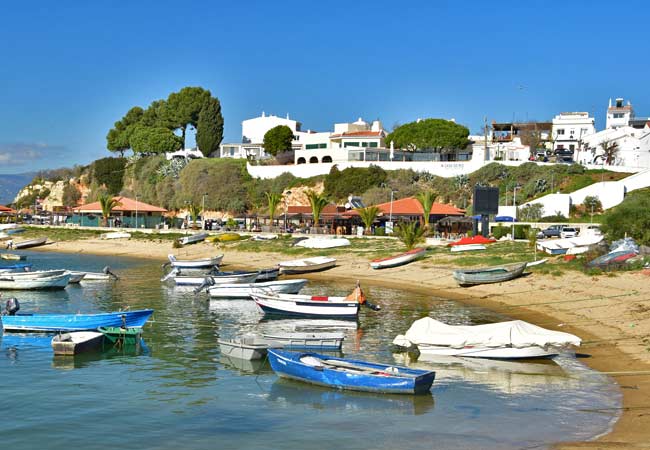
Alvor
My opinion: Portugal's beaches and resort towns are not limited to the Algarve, and in some ways they are not even the best of them. The western Alentejo around Vila Nova de Milfontes has a run of wild, cliff-backed beaches that I would put ahead of anything in the Algarve for sheer drama, and they remain almost empty even in August. Closer to Lisbon, the resort towns of Cascais, Estoril, and Sesimbra offer an easier kind of beach holiday within reach of the capital. And when the Algarve sells out in July and August, as it reliably does, the beaches of the Costa Verde around Porto are a much better-kept secret than they should be.
Lisbon
Lisbon is, to my mind, one of the most likeable capital cities in Europe, and it is why we live here. It is built across seven hills above the Tagus estuary, which means almost every walk ends with a view, and the historic districts of Alfama, Graça, and Bairro Alto have kept a character that other tourist cities lost a decade ago. You should plan at least three full days here, and honestly, you could spend a week without repeating yourself. The city rewards slow exploration more than sight-ticking, and some of my best memories of Lisbon are of afternoons that had no plan at all.
If you are deciding what to prioritise, a handful of sights rise above the rest. The Castelo de São Jorge is where most visitors start, partly for the views and partly because the walk up through Alfama is half of the appeal in itself. Down on the waterfront in Belém sits the Mosteiro dos Jerónimos, arguably the finest example of Manueline architecture in the country, with the adjacent Torre de Belém guarding the mouth of the Tagus. The LX Factory, a former industrial complex turned creative district under the 25 de Abril bridge, is where the modern side of Lisbon shows itself best. And for something that costs nothing, the miradouros (viewpoints) of Santa Luzia, Senhora do Monte, and São Pedro de Alcântara give you the classic tiled-rooftop views over the city.
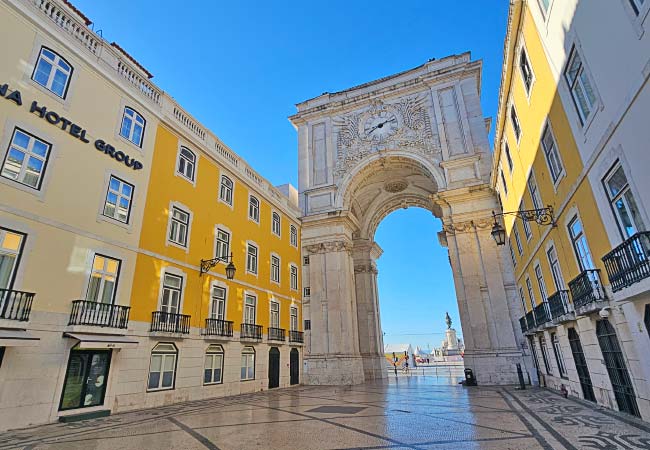
What makes Lisbon particularly useful as a base is everything that sits within an hour of it. Sintra, with its palaces scattered across wooded hills, is the obvious day trip and fully deserves its reputation. Cascais is a handsome seaside town on the train line out of the city. Setúbal, across the bridge to the south, is a working port with some of the best seafood in the country and the Arrábida Natural Park on its doorstep. Sesimbra, further along the same coast, is where Lisboetas themselves head for holidays.
I will give you the honest caveat, though: Lisbon has been thoroughly discovered. In peak summer, the tram queues, the cruise ship crowds in Alfama, the tuk-tuk traffic jams, and the Airbnb-driven pressure on the old neighbourhoods all take their toll, and the city no longer feels like the quiet secret it was a decade ago. If you are travelling in July or August and want a Portuguese city break without the crush, Porto is the obvious alternative (though it too is busier than it used to be).
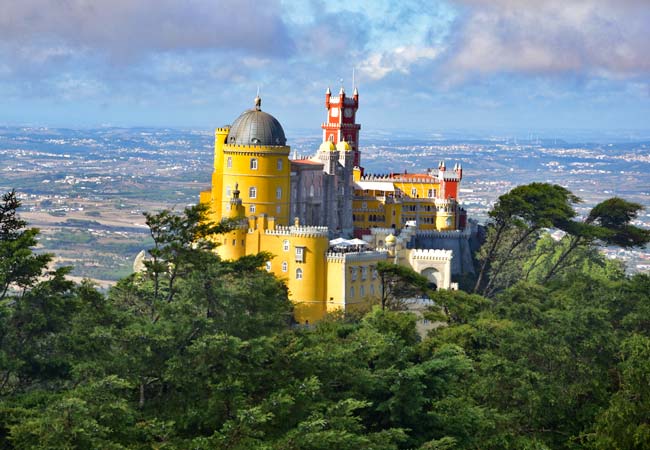
Sintra
The Alentejo region
The Alentejo is the Portugal that most first-time visitors picture before they arrive, and then struggle to find once they get here. It takes up roughly a third of the country, stretching from the Tagus south to the Algarve, and consists of endless rolling plains of wheat, olive groves, and ancient cork oaks, punctuated by whitewashed villages and walled hilltop towns. The pace of life here has barely altered in centuries, and that is precisely the appeal. You do not come to the Alentejo to tick off sights. You come to slow down.
At its heart is Evora, which is, outside of Lisbon, one of my favourite cities in the country. Within its Roman walls you will find a near-intact Roman temple, a fortress-like Gothic cathedral, a tangle of cobbled lanes, and one of the most atmospheric main squares in Portugal. Beyond Évora, the Spanish border is guarded by a chain of heavily fortified towns: Marvão perched on its impossible crag, Monsaraz looking out over the vast Alqueva lake, and Elvas with its extraordinary UNESCO-listed star fortifications.
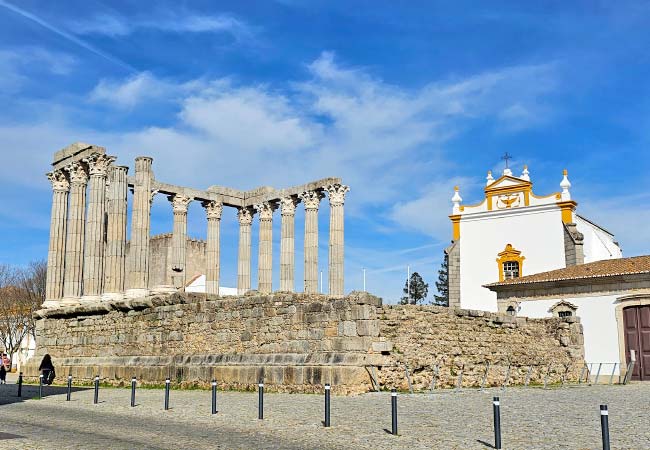
Evora
The Alentejo coastline is, to my mind, the most underrated stretch of coast in Portugal, and foreign visitors rarely make it here. This is a wild Atlantic shore of enormous beaches, powerful surf, and jagged cliffs, with small, unpretentious fishing towns such as Vila Nova de Milfontes and Porto Covo serving as the main bases. If you want a beach holiday without the resort-town infrastructure of the Algarve, and you do not mind that the water is colder and the seas livelier, this is where I would send you.
A practical note. A car is not a luxury here; it is the difference between seeing the region properly and not really seeing it at all. And a word on timing: the summer heat can be punishing, with inland temperatures regularly above 35°C, so I would point you towards spring or autumn, when the plains are green, the wildflowers are out, and the towns are at their most pleasant.
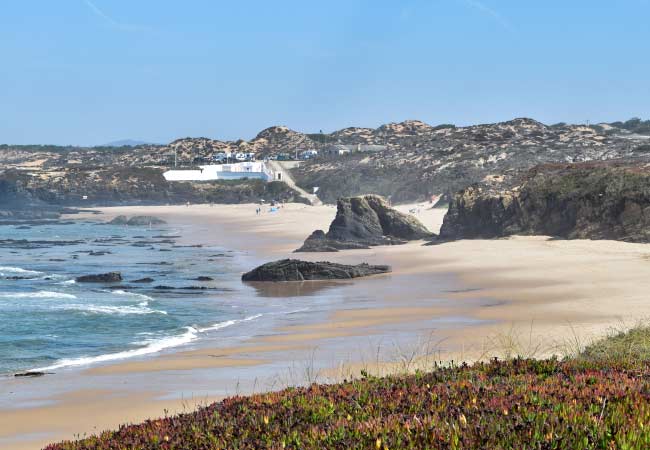
Vila Nova de Milfontes
Porto and North Portugal
Porto is Portugal's second city only in population, and even then, not by much. In every other sense it holds its own against Lisbon, and for some travellers it is the better choice. Where Lisbon has grown polished and increasingly overwhelmed by its own popularity, Porto has kept its working-class character, its steep granite streets, and an unpretentious atmosphere that makes it, to my mind, all the more likeable. Were it not for the wet winters and our family connections to Lisbon, we would probably live in Porto.
The city tumbles down granite hillsides to the Douro River, with the tiled houses of the Ribeira district stacked above the water and the Port wine lodges of Vila Nova de Gaia facing them from the opposite bank. Port wine is, of course, the reason the city exists in its modern form, and the cellar tours in Gaia are one of the few tourist activities I would call essential. The larger houses such as Taylor's, Graham's, and Sandeman each run their own tours and tastings, and a morning spent working your way between a couple of them is one of the more civilised ways to spend a day in Portugal. Across the river, the old city itself deserves at least two days, with the Livraria Lello, the Sé cathedral, the São Bento station tiles, and a dozen quiet miradouros all within walking distance of one another.
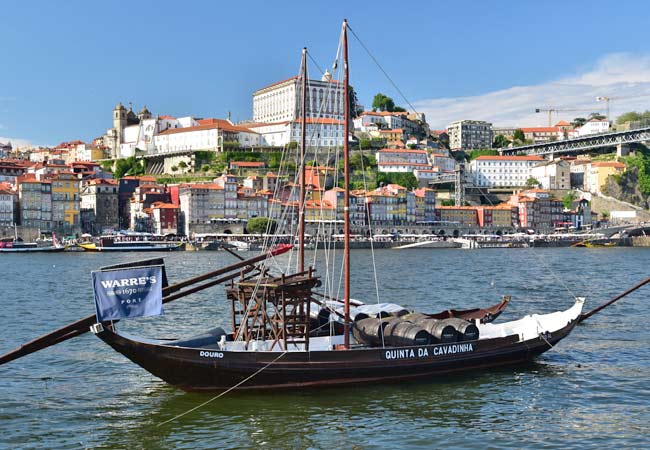
Porto also makes a far better base for exploring the north than most visitors realise. The medieval city of Guimarães, widely considered the birthplace of Portugal, is forty minutes by train, as is the religious centre of Braga. In summer, the beach towns of the Costa Verde further up the coast offer an Atlantic alternative to the overrun Algarve, with cooler water and a fraction of the crowds.
The real reason to base yourself in Porto, though, is the Douro Valley to the east. The river snakes inland through one of the most dramatic vineyard landscapes in Europe, with terraced hillsides that have been carved and farmed for three hundred years. The valley is best seen slowly, either by train from Porto to Pinhão on one of the most scenic rail journeys in the country, or by boat cruise from the city itself. Lamego, Pinhão, and Peso da Régua are the main stops, and the quintas (wine estates) scattered along the valley offer tastings, lunches, and in many cases overnight stays among the vines.
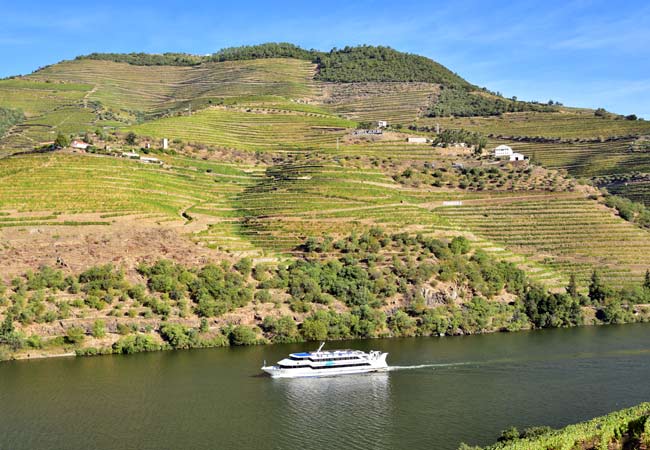
Central Portugal
Central Portugal is, to my mind, the most skipped-over region in the country, and the one I would most encourage a first-time visitor to build into their trip. Most tourists travel directly from Lisbon to Porto on the express train, covering the ground in under three hours and seeing none of it. That is a mistake. The stretch of country between the two cities holds three UNESCO World Heritage sites, the headquarters of the Knights Templar, the largest coastal lagoon in Portugal, and a coastline where some of the biggest waves on Earth break each winter. Few regions of this size in Europe pack in this much.
Coimbra is the natural anchor. Portugal's third city and home to one of the oldest universities in Europe, it has the layered, slightly faded grandeur of a place that has been a centre of learning for eight hundred years. The university itself, perched on the hill above the Mondego river, is worth a half-day on its own, and the old town below has the kind of cobbled, student-filled streets that make for pleasant aimless wandering.
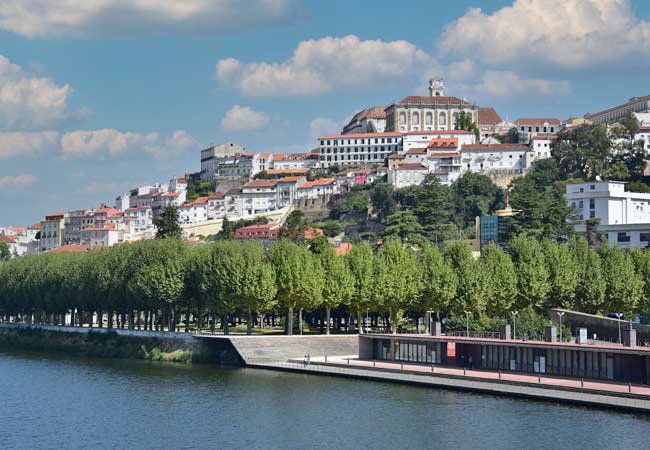
Coimbra
The religious and historical heart of the region, though, runs along a short north-south axis that contains three of Portugal's great monuments. Tomar, the 13th-century headquarters of the Knights Templar, still feels more fortress than monastery. Batalha, a few kilometres further north, is a soaring Gothic monastery built to commemorate the battle of Aljubarrota, which secured Portuguese independence. Alcobaça houses a vast Cistercian abbey and the famously tragic tombs of Pedro and Inês. All three are UNESCO-listed, and all three can be covered in a single day by car if you are short on time, though each deserves more. The walled town of Óbidos, the pilgrimage site of Fátima, and the hilltop Templar castle of Ourém are all in the same cluster.
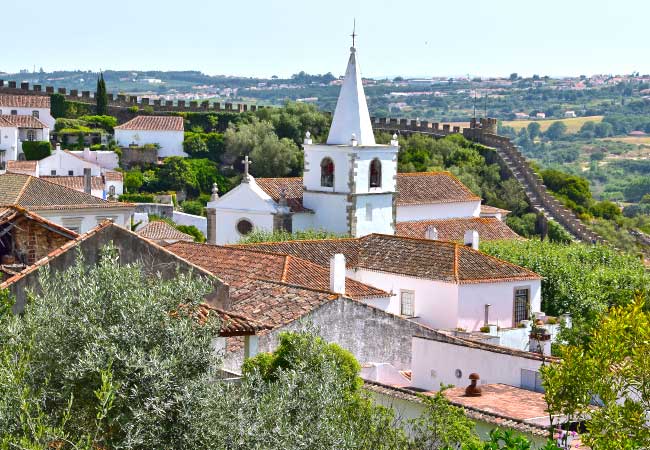
Óbidos
The coast is a different world again. Peniche is a working fishing town with some of the best surf breaks in Europe on its doorstep. Nazaré, a short drive north, is where the giant waves break each winter , drawing professional surfers from across the world to ride swells that can exceed 30 metres. Ericeira, just south, is the only World Surfing Reserve in Europe. Further up, the lagoon town of Aveiro with its painted moliceiro boats and the candy-striped beach houses of Costa Nova make for a gentler stop, and Figueira da Foz offers a traditional Portuguese seaside-resort feel that has largely vanished elsewhere.
Inland, the country climbs towards the Serra da Estrela, Portugal's highest mountain range, which offers serious hiking in summer and the country's only skiing in winter. The nearby Schist Villages, a cluster of traditional stone settlements scattered across the hills, are among the prettiest places in Portugal and almost entirely unknown to international visitors.
My opinion: if you have a week in Portugal, I would genuinely consider spending it here rather than in either of the big cities. It is the region I know best, and the one I return to most often.
Discover the best of Portugal with our guides


About this guide: I'm Philip Giddings. I live in Graça, Lisbon, with my Portuguese wife Carla, whose family have been Lisboetas for generations. I've been visiting Portugal since 2001 and writing the independent guides at MyPortugalHoliday.com since 2011, which is now my full-time work. Central Portugal was where Carla and I did much of our early exploring together, and twenty-five years on we still return to the same towns every year: the beaches at Nazaré and Ericeira with family in summer, the walled streets of Óbidos, and the quieter spots inland that most itineraries skip. Carla's extended family are spread across the region, from an aunt near Évora to good friends in Tomar, which gives me firsthand insight and people to check things with on the ground.
This site has 157 guides covering Portugal, from Coimbra down to the southern Alentejo. It takes no payment from tourist boards, tour operators, or attractions for inclusion, and is funded by affiliate commissions on tour bookings, disclosed on every page that contains them. Every practical detail (ticket prices, opening hours, bus and train routes, time-slot policies) is checked against the official sources and verified in person on the trips I make through the region across the year. Read my full story here.