MyPortugalHoliday.com
The best independent guide to Central Portugal
MyPortugalHoliday.com
The best independent guide to Central Portugal
Mosteiro de Alcobaça (Alcobaça Monastery) Image tour and tourist guide
In the south transept of the Alcobaça Monastery lie two stone tombs, positioned foot to foot so that when their occupants rise on Judgment Day, the first face each will see is the other's. One belongs to King Pedro I. The other belongs to Inês de Castro, the woman he loved, who was murdered on the orders of his own father. On his coronation in 1357, Pedro is said to have exhumed her corpse, dressed it in royal robes, placed it on the throne beside him, and commanded his entire court to kiss her hand. The tomb that now holds her is carried on the shoulders of four stone figures representing her assassins.
The tombs alone would make Alcobaça worth the journey, but the monastery that holds them is itself one of the finest buildings in the country. Founded in 1153 by Portugal's first king, Afonso Henriques, to mark a decisive victory over the Moors, this vast Cistercian abbey is the oldest Gothic building in Portugal and a UNESCO World Heritage Site. The scale of the church is what strikes you first. The nave was the largest in Portugal when it was completed in 1223, and its soaring, unadorned interior reflects the Cistercian vow of austerity. The silence of the stone does half the work.
Beyond the church you will find the Cloister of Silence, where the monks were forbidden from speaking, the Hall of Kings with its 19 statues of Portuguese monarchs, and a medieval kitchen so vast that a whole ox could be roasted over its fire pit, fed by a stream of the Rio Alcoa diverted directly through the room. The church itself is free to enter and takes around 20 minutes to see properly. To explore the paid sections as well, you will want 60 to 90 minutes, which is considerably more than most organised tours allow.
I have been exploring Portugal since 2001, and together with my Portuguese wife I have returned to Alcobaça many times over the years, often as part of a wider loop that takes in Batalha and Nazaré on the same day. This guide shares what we have learned, so you can plan a visit that does justice to both the architecture and the extraordinary story at the heart of it.
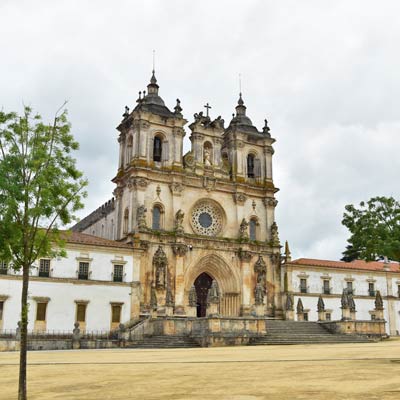
The grand exterior of the Mosteiro de Alcobaça
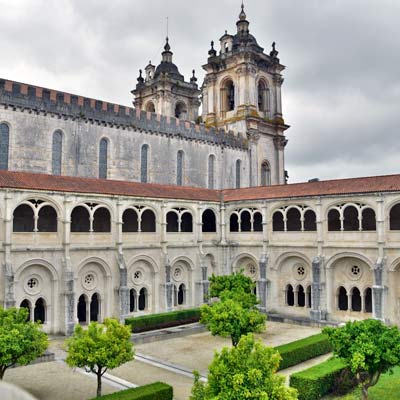
The dual layers of the Cloister of Silence
Mosteiro de Alcobaça Tourist Information
The church (and nave) are free to visit, and this includes the tombs of King Pedro I and Inês de Castro. The €6 entrance fee provides access to one of the cloisters (the Claustro de Dom Dinis) and its adjoining rooms. The entrance fee includes an informative audio guide.
A visit to the church (the free section) takes around 20 minutes, while to explore the entire monastery requires 60 to 90 minutes. Organised tours routinely only provide enough time to see the church (about 30 minutes), if you wish to explore more in-depth consider visiting Alcobaca independently.
Have you considered a small group tour to Alcobaça?
Organised tours in Portugal tend to be of a high standard, with knowledgeable guides and enthusiastic staff, and are a great way to meet fellow travellers. A selection of the best tours covering Alcobaça found by GetYourGuide.com include:
• Fátima, Batalha, Alcobaça and Obidos group tour (€70)
• Alcobaça, Fátima, Batalha, and Óbidos small group tour (€ 114)
• Alcobaça, Óbidos and Nazaré, Private Trip by Car (€104.50)
• Three Monasteries Tour small group tour from Lisbon
Interesting facts about the Alcobaça Monastery
The Monastery is positioned on the confluence of two rivers, the Rio Alcoa and the Rio Baça (hence the name of the town Alcobaça).
Following his victory over the Moors at Santarém in 1147, King Afonso Henriques commissioned the church from Saint Bernard of Clairvaux, founder of the Cistercian Order. This act secured crucial favour from the Pope for Portugal's fledgling dynasty, and Bernard's French origins explain the monastery's distinctively French Gothic architectural style.
Upon his coronation in 1357, King Pedro I famously exhumed the body of his murdered beloved, Inês de Castro, placed her on the throne, and commanded his entire court to kiss her hand. Her tomb is supported by four carved figures representing her assassins. Both tombs were later desecrated by invading French soldiers in 1810, who broke them open in a futile search for jewels.
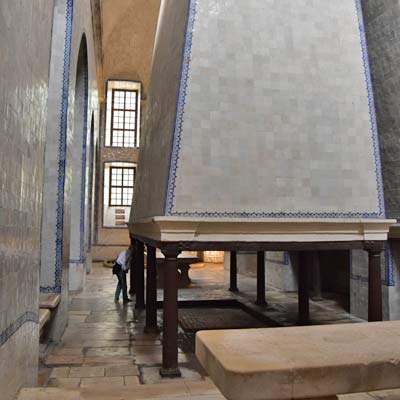
What could be cooked in this huge fire pit, a whole ox!
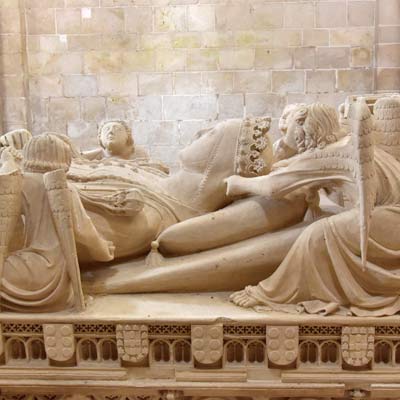
The beautiful carved tomb of Inês de Castro
At its peak there were over 900 monks housed in the monastery and the fertile lands owned by the monastery ensured it prospered. The Mosteiro de Alcobaça was originally harsh and silent, but by the 18th century, it had gained a reputation for overindulgence (especially with food). This is exemplified by the colossal chimney in the kitchen, which was designed to accommodate a whole ox over the fire pit.
Batalha or Alcobaça?
The Mosteiro da Batalha is a 14th-century monastery complex, which was constructed in commemoration of the battle of Aljubarrota. Both Alcobaça or Batalha are often combined in the same day trip or organised tour as they are only 20km apart.
In a direct comparison, most visitors would recommend Mosteiro da Batalha over the Mosteiro de Alcobaça. The Mosteiro de Alcobaça has a much more austere appearance (Early-Gothic styling) than the decorative Mosteiro da Batalha (Late-Gothic and Manueline styles).
Related articles: Batalha - Mosteiro da Batalha
Image tour of Alcobaça Monastery
This section will provide an image tour of the Mosteiro de Alcobaça. This first section can be visited without an admission ticket.
The façade of the church was remodelled during the 18th century and is a combination of Gothic (rose window) and Baroque (the towers).
The monastery dominates the centre of Alcobaça
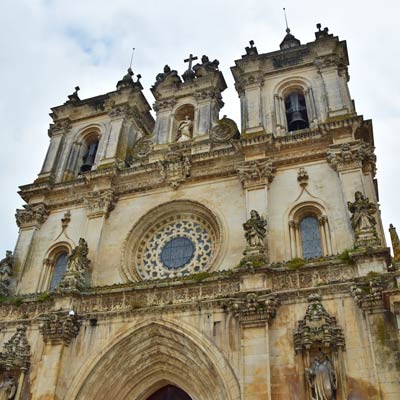
Statues of Saint Benedict and Bernard are either side of the main portal
The interior is simple, sparse and follows a classic Latin cross layout.
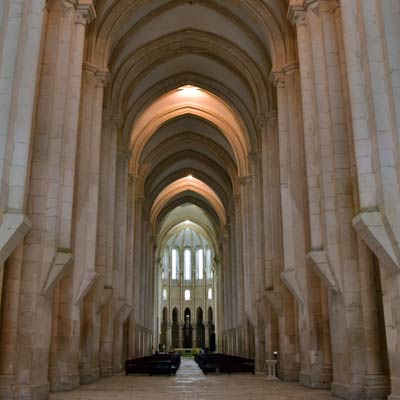
When the church was completed in 1223, it was the largest church in Portugal
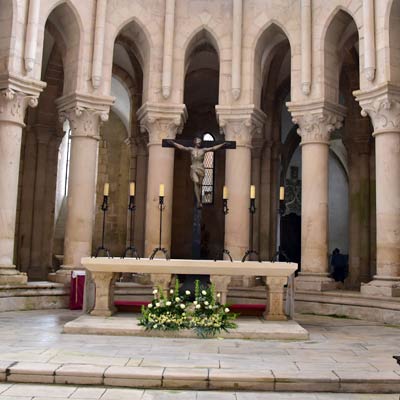
The main altar of the church
On either side of the altar are the tombs of Pedro (right south side) and Inês de Castro (left northern side).
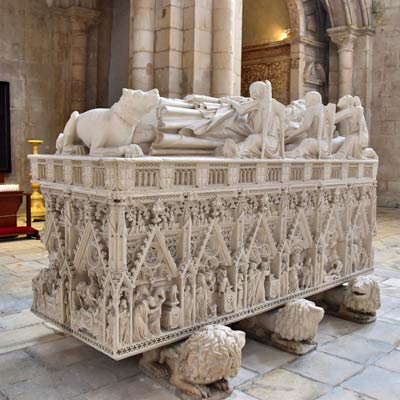
The Túmulo de Dom Pedro
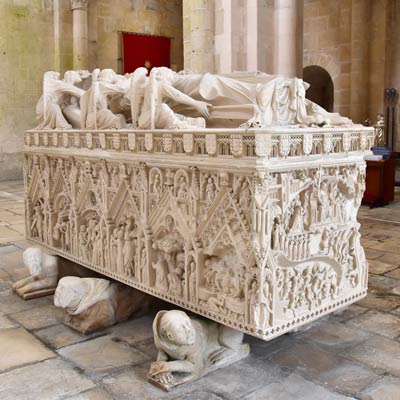
The Túmulo de Inês de Castro
The royal pantheon (Panteão Real) is on the south side on the main Nave and contains the tombs of many early kings and queens of Portugal. In the altar opposite the Panteão Real is a terracotta depiction of the death of Saint Bernard, but this has been unfortunately damaged by rainwater.
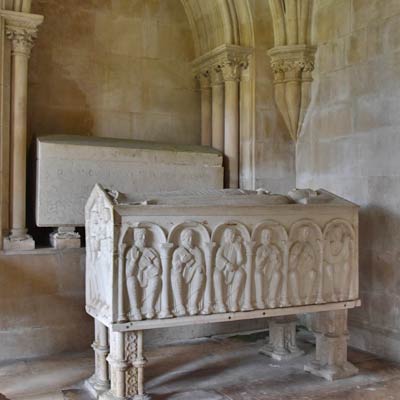
The Panteão Real and the tomb of Queen Urraca
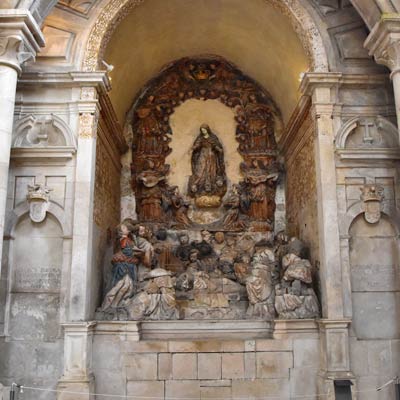
The Retábulo da Morte de São Bernardo
The sacristy was destroyed by the 1755 earthquake and was rebuilt in the Manueline style. This period is represented by elaborate stone carving, and the Mosteiro dos Jerónimos (Lisbon) is the finest example.
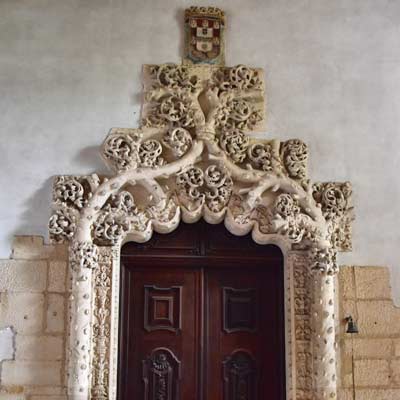
The entrance to the Sacristy
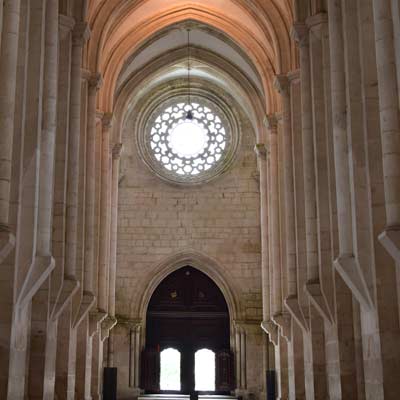
The sombre style of the nave, while walking to the ticket office
Paid sections of the Alcobaça Monastery
The following sections can only be viewed after purchasing an entrance ticket €6.
The cloisters were constructed around 1280, under the rule of King Dinis, 130 years after King Afonso I commanded the construction of the church.
The first room entered after paying the entrance fee is the Kings Hall (Sala dos Reis). This room contains 19 statues of the Portuguese kings, while the painted tiles (azulejos) detail the history of the Mosteiro de Alcobaça. The most notable statue is the coronation of King Afonso I, by Saint Bernard and Pope Alexander III, and thus implying Portugal’s legitimate status as a country after crusades.
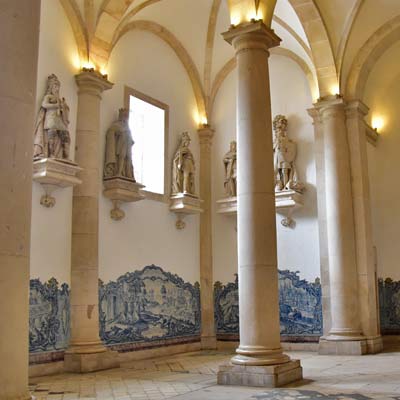
The Kings Hall (Sala dos Reis)
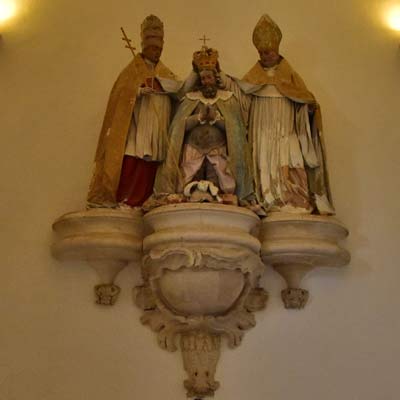
The coronation of King Afonso I, by Saint Bernard and Pope Alexander III
The king hall exits onto the Claustro de Dom Dinis (the Cloister of King Dinis), but it is often referred to as the cloister of silence, as the monks were forbidden from talking.
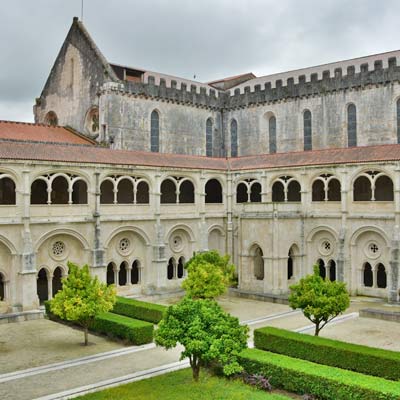
Cloister of Silence Sala do Capítulo
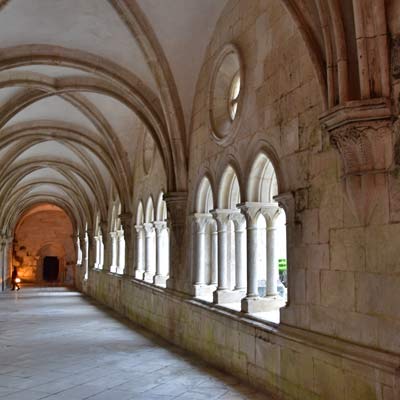
The austere gothic cloister
The chapter house is on the northern side of the King Dinis Cloister and was where the monks would hold religious meetings. Next to is the shop but this small room was the Parlour, the only room in the monastery where the monks were allowed to talk between themselves.
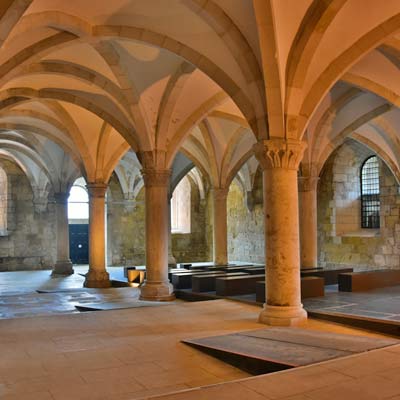
The monks hall
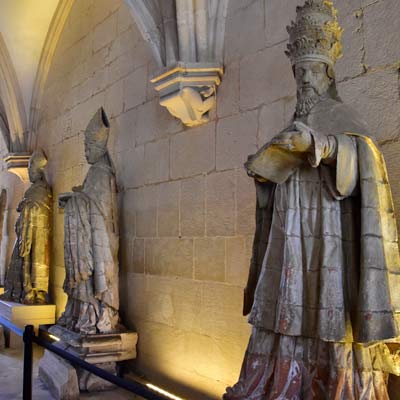
Statues line the walls of the chapter house
Upstairs is the vast dormitory, which was the communal sleeping area for the monks. The chamber extends for 67m and was devoid of and artistic detail, so as not to distract the monks from their work and study.
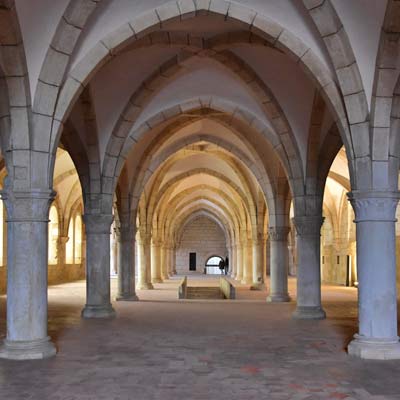
The dormitory
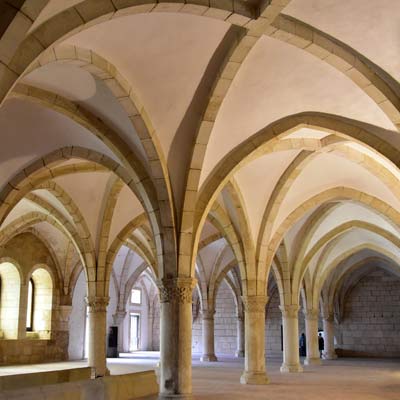
The Dormitório, Mosteiro de Alcobaça
The dormitory was connected to the upper level of the Cloister of Silence and the Claustro do Cardeal (Cloister of the Cardinal). The Cardinal Cloister is not open to the public but can views from the balcony.
The third cloister (Claustro do Rachadoiro) once had an extensive library containing one of the largest collections of Portuguese mediaeval religious texts, but these were destroyed by Napoleon’s troops in 1810.
The upper level of the Cloister of Silence can be walked around.
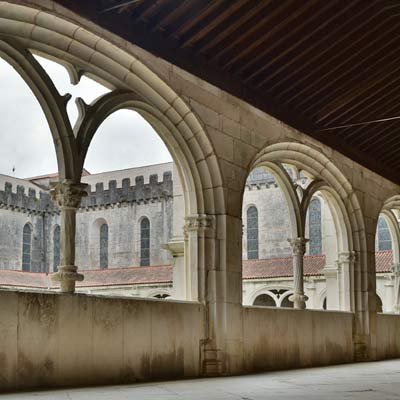
The upper level cloister follows the gothic styling and has a wooden roof
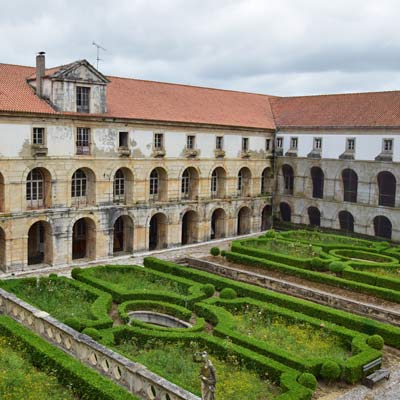
The Claustro do Cardeal (Cloister of the Cardinal)
While heading out to the cloister of Silence do not miss the view of the upper level of the kitchen and huge chimney which extends from the kitchen.
The next room to visit is the refectory and this is on the lower cloister level, so return via the dormitory.
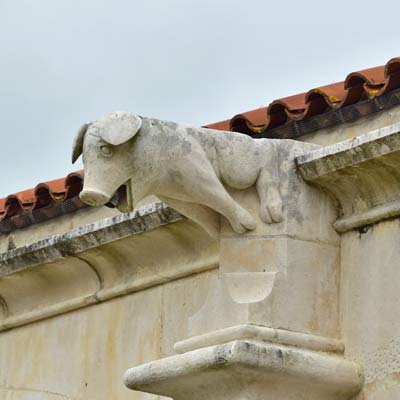
A gargoyle carved in the shape of a pig…..
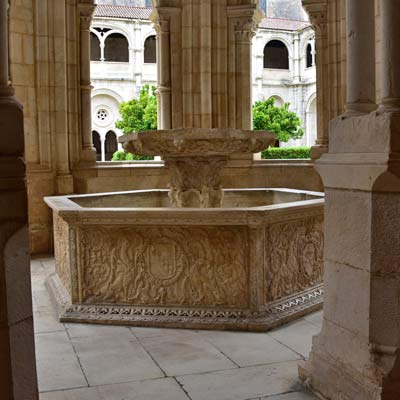
The fountain where the monks would wash their hands before meal times
The refectory is the iconic room of the monastery and has a high vaulted ceiling supported by gothic arches. On the southern side is the pulpit where the (abbot) would teach from.
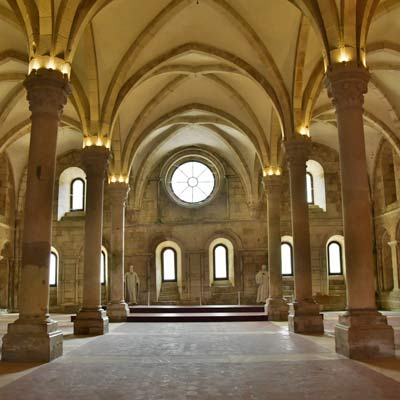
The refectory
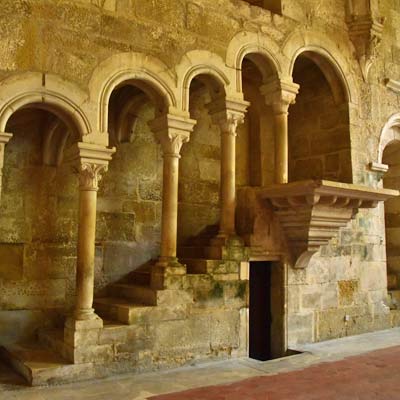
The pulpit in the refectory
Next to the refectory is the kitchen, and this is the room which is often the most interesting for visitors. The kitchen is lined with white tiles and is completely dominated by the huge oven and chimney in the centre of the room. This oven was designed so that a whole ox could be roasted over the fire pit.
The Rio Alcoa was diverted to provide a constant source of water to the kitchen.
The monastery’s kitchen
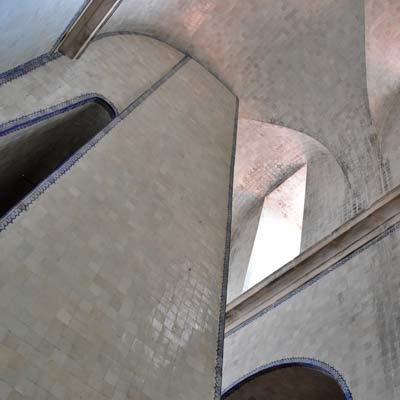
The massive chimney
This concludes the tour of the monastery and visitors return to the church via the Kings Hall
Discover more of central Portugal with our guides


About this guide: I'm Philip Giddings. I live in Graça, Lisbon, with my Portuguese wife Carla, whose family have been Lisboetas for generations. I've been visiting Portugal since 2001 and writing the independent guides at MyPortugalHoliday.com since 2011, which is now my full-time work. Central Portugal was where Carla and I did much of our early exploring together, and twenty-five years on we still return to the same towns every year: the beaches at Nazaré and Ericeira with family in summer, the walled streets of Óbidos, and the quieter spots inland that most itineraries skip. Carla's extended family are spread across the region, from an aunt near Évora to good friends in Tomar, which gives me firsthand insight and people to check things with on the ground.
This site has 157 guides covering Portugal, from Coimbra down to the southern Alentejo. It takes no payment from tourist boards, tour operators, or attractions for inclusion, and is funded by affiliate commissions on tour bookings, disclosed on every page that contains them. Every practical detail (ticket prices, opening hours, bus and train routes, time-slot policies) is checked against the official sources and verified in person on the trips I make through the region across the year. Read my full story here.
 -
-


If you've found our content valuable, we'd welcome your support.
The digital publishing landscape has evolved significantly. As a small independent publisher, we face growing challenges. Search engines increasingly favour paid content over organic results, while AI-generated content often reproduces original work without attribution.
To support our work, please consider bookmarking this page (press Ctrl + D) for quick access. If you find an article helpful, we'd be grateful if you'd share it with friends on social media.
For specific questions, please see our Reddit community at r/LisbonPortugalTravel.
Should you notice any outdated or incorrect information, please contact us at [email protected]
Thank you for helping us continue to provide valuable content in an increasingly challenging digital environment.