MyPortugalHoliday.com
The best independent guide to Central Portugal
MyPortugalHoliday.com
The best independent guide to Central Portugal
Peniche, Portugal: an independent travel guide for 2026
If I had to describe Peniche in a single word it would be raw. The raw beauty of the Cabo Carvoeiro headland, the sheer power of the Atlantic surf and the unpolished, working-class heart of this fishing town.
Nothing here is manicured for tourism, which means visitors either love it or can’t wait to get back in their car. I've had some of my best surfing sessions here, but I've also been embarrassed by its dilapidated state when showing my parents around, whose lasting summary was, 'it's not as nice as Sesimbra.'
Much of that character comes from the peninsula itself, a jagged finger of rock that juts into the Atlantic, shaped by centuries of wind and waves. The deep-rooted traditions of a hardy fishing community run the harbour here, and you will see them in the small, unpretentious restaurants along Avenida do Mar where the day's catch arrives a few hours after it was pulled from the sea. Either side of the peninsula lie world-class beaches, where a surf scene has grown up, drawn by the Supertubos waves and the reliable swell at Baleal. This was why I first came to Peniche in 2004, but the many trips since have shown me there is far more to the place.
There is the dramatic scenery, from the wind-battered cliffs at the western tip of the peninsula to the barren Berlengas islands with their clear, cold waters. Above the harbour stands the 16th-century Fortaleza de Peniche, a reminder of the town's darker past when it was a notorious political prison of the Salazar regime. Then there is the quaint fishing quarter, its tiny houses clinging to the cliff top, unexpectedly cheerful for such a tough working town.
Peniche is unlike many other destinations in Portugal, where I enthusiastically say 'yes you must go'. It needs a bit of consideration before a visit, but it should never be discounted.
I have been exploring Portugal for over 20 years and, together with my Portuguese wife, have returned to Peniche many times, whether with friends as an addition to a day trip to Óbidos, or as a base for a surfing trip. This guide shares our first-hand knowledge and local insights, so you can discover the Peniche we have come to know.
My highlights of Peniche
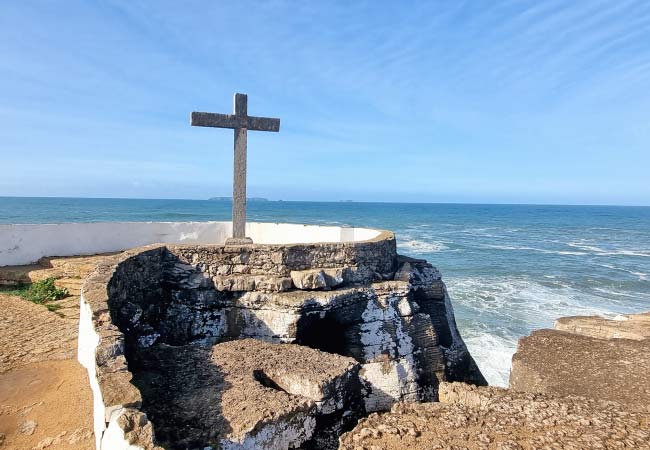
The Estrada Marginal Norte - The wind-blasted road that skirts the northern and western sides of the Peniche peninsula, passing jagged cliffs, crashing waves and striking natural scenery before reaching the Miradouro Cabo Carvoeiro viewpoint. A wonderful coastal walking route of 7km and the best way to experience this wild Atlantic coast.
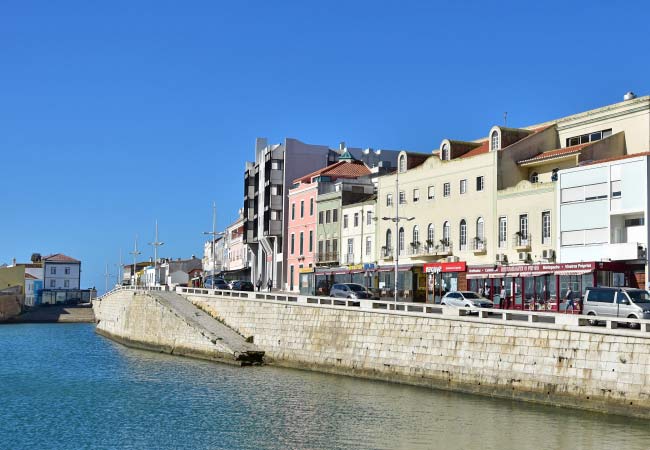
Peniche's seafood restaurants - Serving the fresh catch from the town's fishing fleet, there are many excellent restaurants grouped together along Avenida do Mar. My favourites include A Sardinha, O Pedro, O Popular, O Oceanário and Onda Azul. To see the fresh fish being sold, head to Mercado Municipal early in the morning.
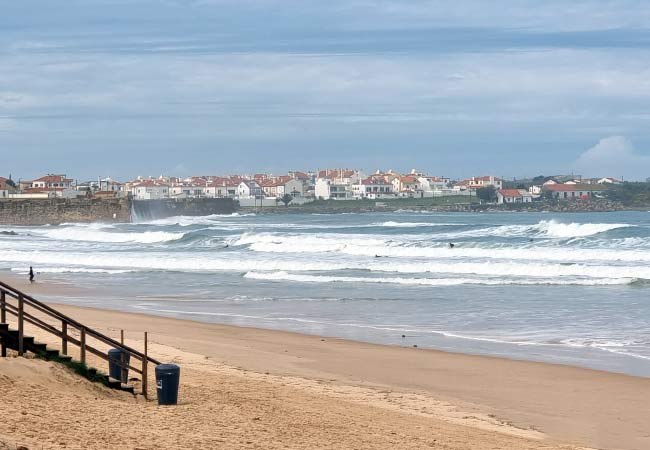
Surfing - Whether you choose Supertubos beach or Praia Baleal, Peniche offers some of the finest surfing conditions in Europe. Powerful swells, sandy beaches and ample space make for excellent sessions. After surfing, the town has inexpensive restaurants, sociable bars and plenty of like-minded people to meet.
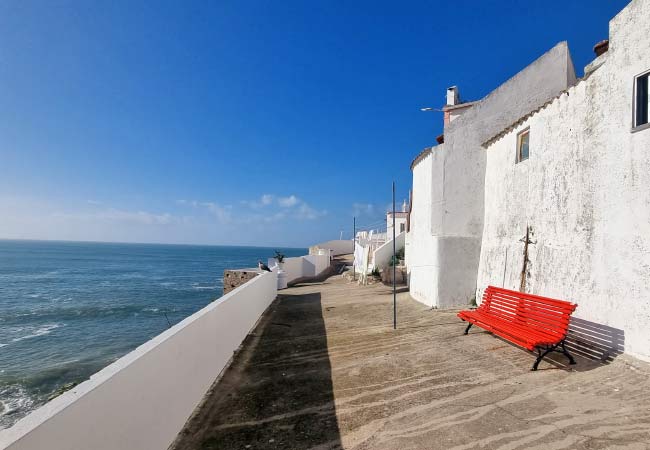
The fishermen's quarter - Traditional fishermen's houses perch above the cliffs to the north of the fishing harbour. Sheltered from the strong winds, these tiny houses provide views over the ocean so that fishermen's wives could watch for the safe return of their loved ones.
A day trip to Peniche
Peniche is not often considered a day trip destination from Lisbon, but there is a surprising amount to see and do. If you are based in Lisbon and have a car, it combines well with a trip to Óbidos or Nazaré. Equally, if you are touring through the Óbidos, Nazaré or Ericeira region, Peniche makes for an enjoyable stop.
The town takes around three hours to explore fully and pairs well with a visit to Óbidos (24km away). Óbidos is the main draw of the region, but much smaller than most visitors expect, which is why I always recommend combining the two for a day trip. Peniche is also much better for lunch, with far more food options than tourism-focused Óbidos.
You can easily make a full day of Peniche by including the Cabo Carvoeiro headland or the pretty village of Baleal. A popular option is a half-day excursion to the Berlengas Islands, with ferries and tours departing from Peniche harbour. I would only consider a trip to the Berlengas Islands when the weather is good and the seas are calm. Having visited out of season in slightly rougher conditions, I felt seasick on the ferry across.
After visiting all of Portugal, I would consider Peniche similar to Setubal, Olhão, and Viana do Castelo. If you enjoyed any of these, you will likely enjoy Peniche too.
Below is an interactive map of Peniche, showing a suggested walking tour and the major sights of the region. The yellow line marks the walking tour, which begins and ends at the bus station and covers 7.8km. The green line is the scenic coastal hike to Cabo Carvoeiro, a 7.3km route best walked in an anti-clockwise direction. Zoom in or out to see all of the points.
Walking tour (yellow): 1) Fishing harbour (and boats to Berlenga Grande) 2) Peniche fort 3) Peniche museum 4) Fishing quarter 5) Igreja de São Pedro 6) Handicraft museum 7) Town Hall 8) Igreja da Misericórdia 9) Baluarte garden 10) Peniche market 11) Gambôa beach
Sights of the Peniche region (green): 12) Baleal village 13) Baleal beach 14) Cova da Alfarroba beach 15) Papoa Island 16) Cruz dos Remédios viewpoint 17) Cabo Carvoeiro 18) Nau dos Corvos 19) Supertubos beach
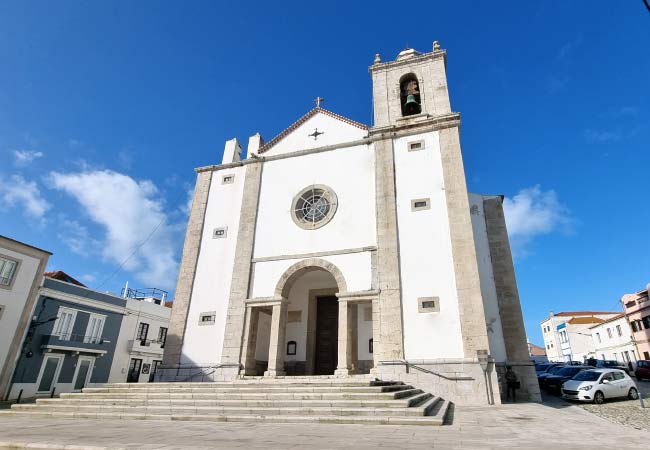
The Baroque Igreja de São Pedro is the main church of Peniche
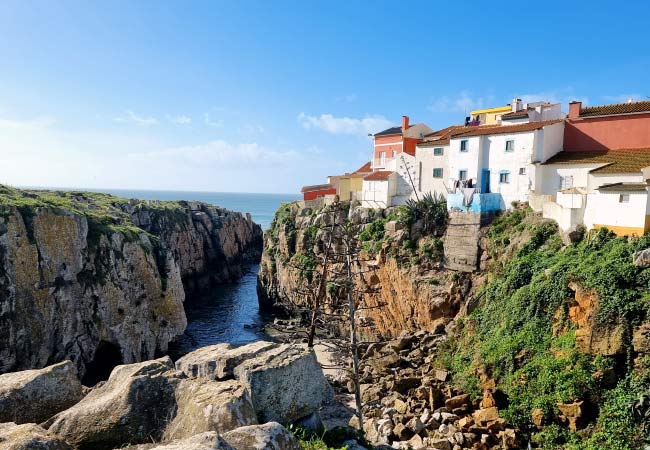
The Miradouro do Carreiro de São Marcos viewpoint, overlooking the fishing quarter
Activities in Peniche
The Peniche region offers plenty of activities beyond surfing and beach visits. Popular tours available through GetYourGuide include:
The links above are affiliate links. If you book through them, I earn a small commission at no extra cost to you. I really appreciate it, as it helps me keep this site free and running.
The Berlengas Islands
The Berlengas Islands are a series of windswept, barren islands located 10km west of Peniche. Battered by powerful seas and ceaseless winds, they are a haven for bird and marine wildlife, in the clear (and cold!) sea waters. The largest of the islands, Berlenga Grande, is open to the public and makes a unique sight while in Peniche.
Berlenga Grande has a dramatic coastline of caves and haphazard cliff formations carved out by the powerful Atlantic Ocean. Concealed on the sheltered side is the Forte de São João Baptista, a unique fort sitting on a rocky outcrop, surrounded by shallow turquoise sea and only accessible via a long bridge. This defensive position was so strong that a garrison of 28 troops was able to hold off an entire Spanish flotilla of 15 warships (and about 1,500 men) in 1666, and only surrendered when they ran out of ammunition.
For what could be considered just some barren rocks, there is a surprising amount to do, with boat tours around the coastline, snorkelling off the sheltered beach and footpaths crossing the island. And the whole time here you will be accompanied by the ceaseless squawking of the seagulls.
There are many tour companies offering trips to the islands on ferries, speed boats and everything in between. My word of warning is only visit on a calm sunny day as the seas can be rough with huge Atlantic waves. On a trip in late September, I felt terribly seasick crossing the slow rolling waves. Also do bring swimming clothes as the waters are very clear and great for snorkelling, if you can brave the chilly waters.
Related articles: A day trip to Berlenga Grande
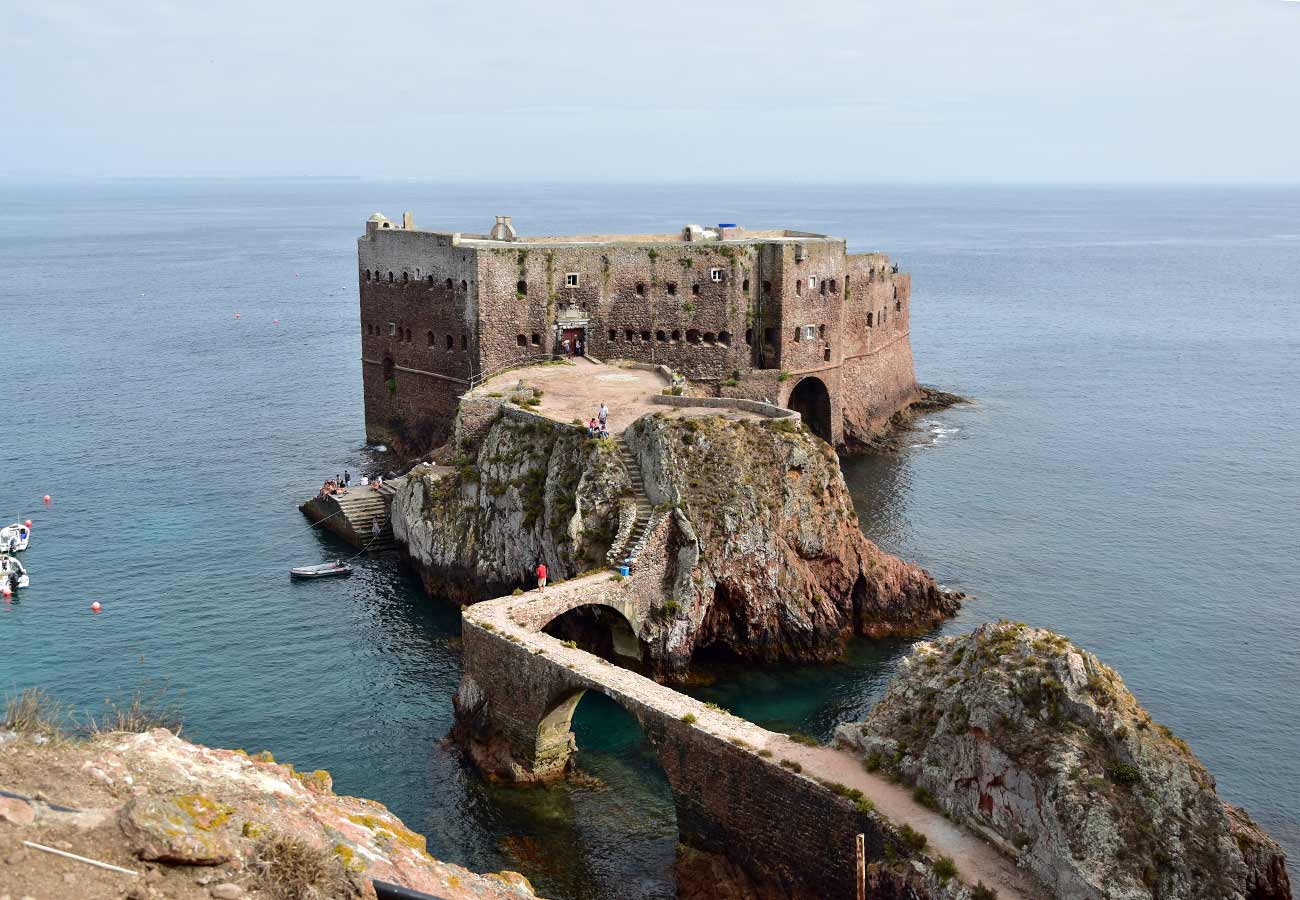
The Fort of São João Baptista
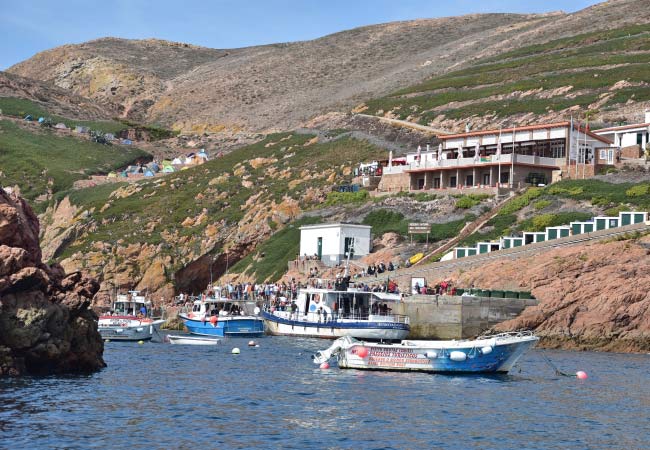
The harbour on Berlenga Grande, busy with summertime tour boats and tourists
Surfing at Peniche
Let me assure you that the Peniche region is fantastic for surfing, and it's often what draws people to the region for an extended stay. It was certainly why I first headed here back in 2004, so I understand the appeal.
The beaches face in several directions, which means there is almost always somewhere with offshore winds and clean waves, whatever the weather is doing. The beaches here also tend to be larger and more spread out than those at nearby Ericeira, and I've never struggled for space, even when the casual holiday surfers pile in. Ericeira has more of the surf 'scene', with its hostels, shops and bars. It's where I pointed my 19-year-old cousin when surfing was second to having fun.
A quick overview of the Peniche surf beaches:
• Praia dos Supertubos: Located to the south, this is the most famous beach break in Portugal, known for its heavy barrels. In the right conditions it produces hollow, incredibly powerful waves up to three metres high. Best suited to experienced surfers.
• Lagide: On the north side of the Baleal peninsula, this exposed reef break offers a long, manoeuvrable left-hand wave. It's great for intermediates and one of my favourite spots to surf.
• Cantinho da Baía: On the south side of the Baleal peninsula, this semi-sheltered spot provides a relaxed wave and is a favourite with the surf schools.
• Praia do Molhe Leste: Sitting next to the eastern harbour wall, this spot is protected from large swells and the constant northerly winds. It creates fast, hollow right-hand waves that work when other spots in the area are completely blown out.
The sandy beaches also make Peniche a popular destination for learning to surf, with numerous surf schools in the area. The region suits a surfing holiday well, with inexpensive food, affordable accommodation and a relaxed atmosphere. Wetsuit and board hire costs €20 for a 5-hour rental.
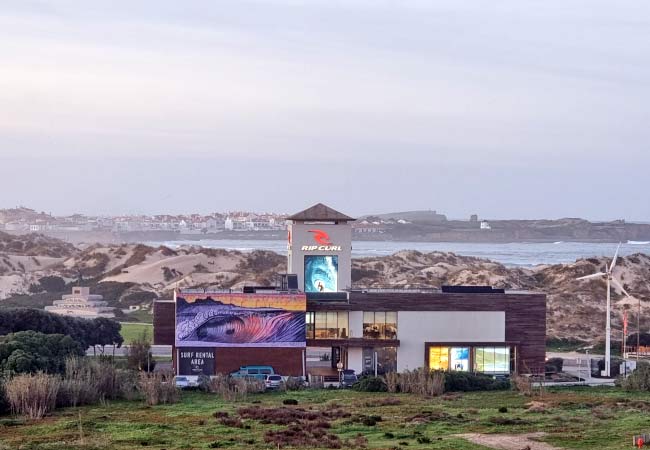
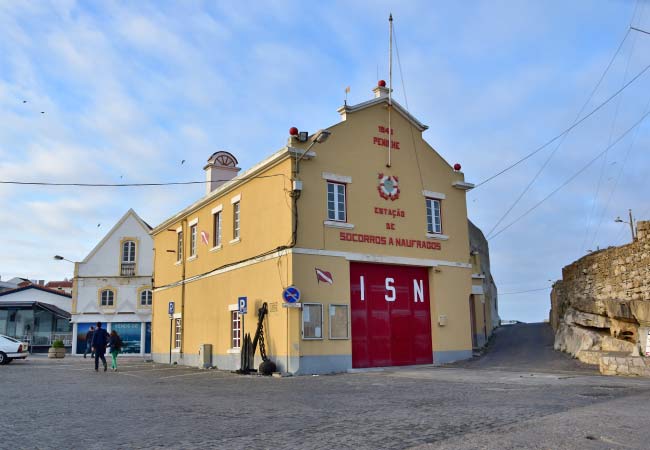
The lifeboat station in Peniche
Accommodation in Peniche
Peniche offers a wide variety of accommodation, from budget-friendly hostels and characterful guest houses through to modern hotels. The only real gap is at the high end, as there are no four or five-star hotels in the town.
Accommodation is spread across three main areas: the town centre, Baleal and the beach areas. Within Peniche itself are many guest houses and apartments, while the larger hotel complexes, with their pools and extensive facilities, are situated along the coast. The pretty village of Baleal, 3km north of Peniche, is a popular alternative during summer, and is where I base myself for a purely surfing trip.
There are over 45 accommodation options available, but the best will sell out during peak season. The largest and highest-rated hotel in Peniche is the three-star MH Peniche (link opens new tab). I stayed here with my parents; it was convenient for the town and had an excellent breakfast. Just in front is the Star Inn, which is slightly cheaper and makes a good alternative.
Some of the best accommodation in Portugal is found in family-run guest houses. The finest examples in Peniche are Pillows Peniche and Ó da Casa, though both have only a few rooms and sell out quickly. I'd suggest booking at least two months ahead for summer visits. Other good guest houses include O Forte Guest House, Capital Boutique Bed and Breakfast and White Guest House.
For budget travellers seeking hostels, recommended options include WOT Peniche in the centre of Peniche or Supertubos Beach Hostel, situated on the quieter southern side of Supertubos beach.
The map below displays hotels and accommodation in Peniche. Adjust the dates to match your trip to see current prices and availability.
Insight: Many hotels offer free cancellation, which can be a useful tactic for securing a room at a good price while keeping your options open.
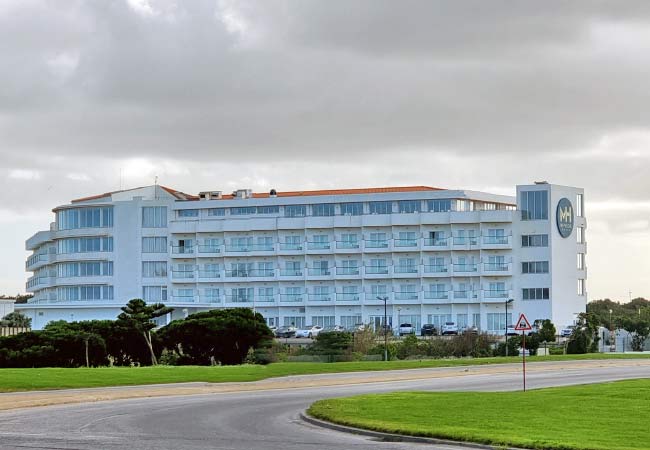
The MH Peniche
Travel to Peniche
To get the most from the Peniche region, a car is highly recommended. I had a surfing trip here based on public transport and it was manageable, but I was always reliant on the few Ubers which are based in the town. For a day trip, there is a large free car park just outside the city walls at GPS: 39.357, -9.376 (link to Google Maps).
If you are reliant on public transport, three bus companies operate routes from Lisbon to Peniche, though frustratingly they each depart from a different bus station in Lisbon.
Rodotejo - This regional bus company provides express services between Lisbon and Peniche via the Rápida Azul route, departing from Campo Grande (Lisbon). The journey takes 1 hour 25 minutes. This is my preferred option Monday to Friday as it's the most direct, but at weekends there are few departures - www.rodotejo.pt/
Rede Expressos - The national coach operator of Portugal offers express services departing from Sete Rios bus station in Lisbon. This is a better option at weekends. Rede Expressos uses dynamic pricing based on demand, so expect higher fares on Saturdays and Sundays - www. www.rede-expressos.pt/
FlixBus - A low-cost operator that typically offers the cheapest fares. Services depart from Oriente bus station in Lisbon. Seats sell out during the summer, and I always find their buses the busiest www.flixbus.pt/
Peniche bus station is located in an ugly industrial area (GPS 39.360, -9.375) and is not the most scenic spot to begin a visit. Don't let the setting put you off. From the bus station it is a five-minute walk to the city walls or ten minutes to the harbour. The ticket office and waiting room are closed at weekends, so if you're travelling on a Saturday or Sunday, buy your return ticket online beforehand.
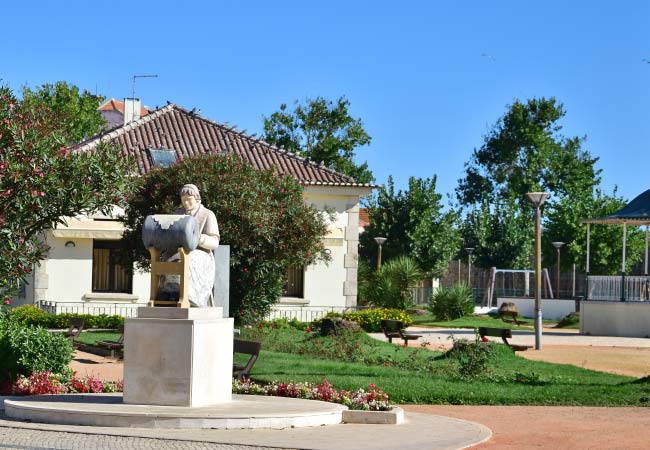
The Parque do Baluarte garden and the Rendilheira statue
Cabo Carvoeiro
Cabo Carvoeiro is one of the most westerly points of mainland Europe, and the peninsula was always a danger to shipping. In 1786 the Spanish treasure ship San Pedro de Alcántara, homebound from Peru with tons of silver and gold, was wrecked on these rocks. Divers spent the next three years hauling the treasure back up, and the lighthouse was built soon after to stop it happening again.
Below the lighthouse, at the very tip of this bleak, windswept point, stands a distinctive rock formation called the Nau dos Corvos (Ship of the Crows), named for the seabirds that gather on it.
A scenic 7km hiking trail or bike ride follows the coastal road around the western edge of the Peniche peninsula. I love this hike, with the wild power of the Atlantic Ocean crashing on the cliffs far below and the strong northerly ‘Nortada’ winds cooling even the hottest of days. The trail starts from the northern side of Peniche on the Estrada Marginal Norte, passing the Cruz dos Remédios viewpoint and Santuário de Nossa Senhora dos Remédios before reaching the lighthouse and Nau dos Corvos. For the return, I follow the Estrada Marginal Sul, which passes jagged cliffs and the sheltered beaches of the southern coastline. When I do the hike, I give myself around two hours at a leisurely pace.
Cabo Carvoeiro is a wonderful spot to watch the sun set over the Atlantic.
Insight: The Peniche peninsula dates from the early Jurassic period (183 million years ago) and is much older than the rest of mainland Portugal. Peniche was originally an island, which became connected to the mainland over millennia by siltation and oceanic forces. This is why the peninsula's rocks and landscapes appear so different from the surrounding coastline.
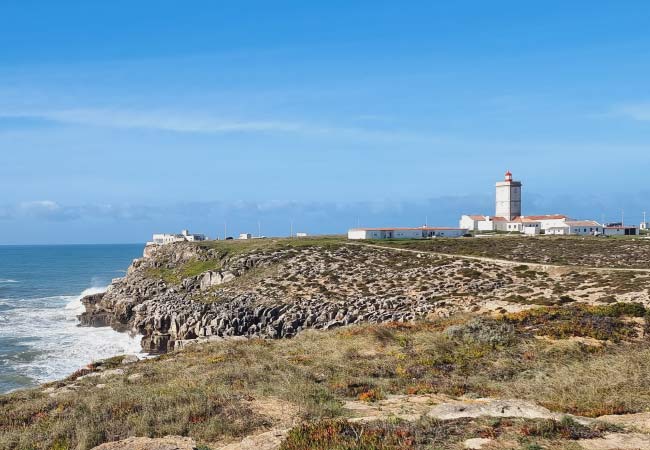
The windswept Cabo Carvoeiro headland and lighthouse
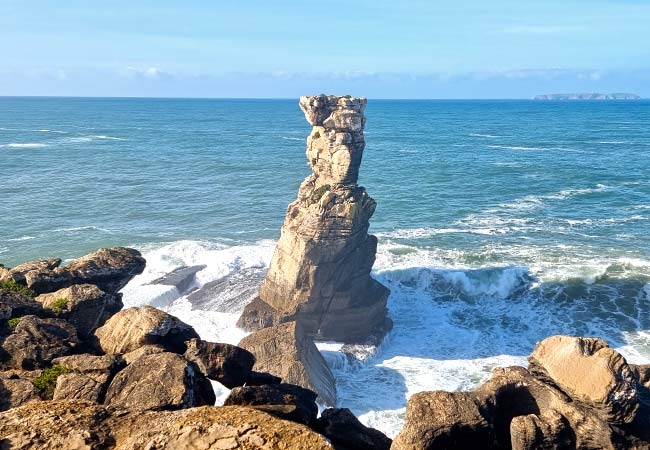
The Nau dos Corvos rock formation, battered by Atlantic waves
The Fortaleza de Peniche
The Fortaleza de Peniche is a sprawling 16th-century fortification, infamous among the Portuguese as a notorious political prison during the Estado Novo dictatorship (1932 to 1974). The fort stands on a rocky promontory above the fishing harbour, built in the 1550s to defend the town against pirates who repeatedly raided this stretch of the Atlantic coast.
Today it stands as a well-preserved example of Renaissance military architecture, and inside is the sombre Museu Nacional Resistência e Liberdade, which documents the complex's dark history. Visitors can see the former prison cells and exercise yard, a steel memorial listing the names of the roughly 3,000 people held here, and learn about the experiences of those imprisoned. For me it was a sobering visit, especially after reading some of the prisoner stories, which bring the history to life in a way the bare cells alone cannot.
Full details can be found on the Museu Nacional Resistência e Liberdade website: www.museunacional
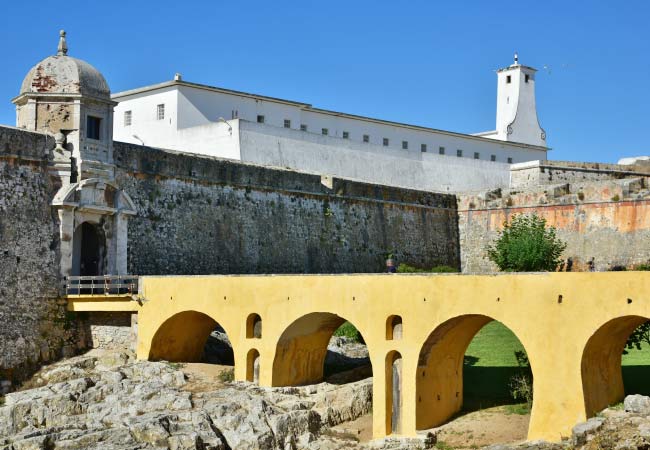
The only entrance into the fort crosses a dry moat
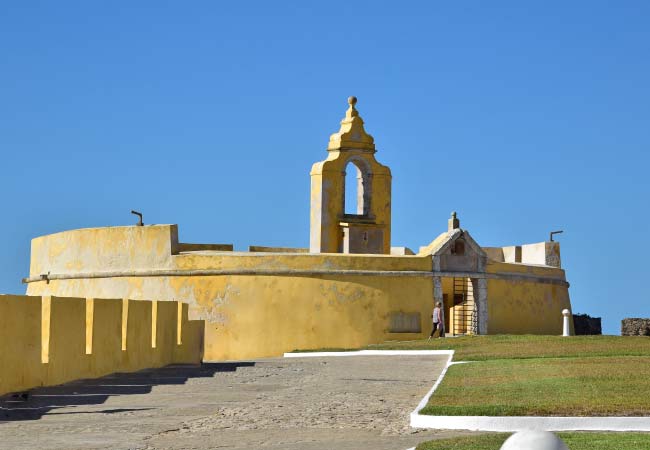
The inner defensive building of the fort
Peniche weather
Peniche's weather is shaped by the Atlantic, which wraps around the peninsula on three sides. This maritime influence keeps summers cool and winters mild, with far less swing between the seasons than you'll find inland. Summer highs rarely climb past 25°C, and cold winter days are almost unheard of. The trade-off is the wind, the same exposure that moderates the temperature also makes Peniche notably breezy, with the ‘Nortada’ winds blowing strongly from the north between July to September.
During the winter Peniche becomes damp with frequent ocean mists and high humidity, even on cooler days
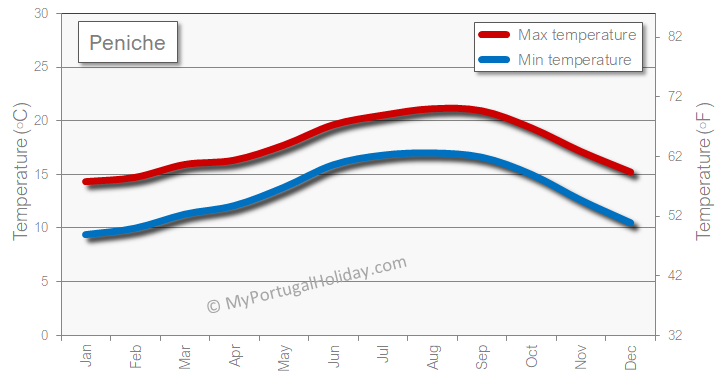
The average day time maximum and the nighttime minimum temperature for Peniche
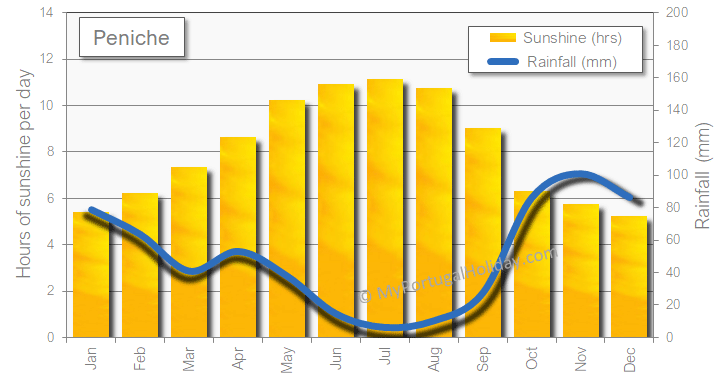
The average hours of sunshine per day and monthly rainfall (in mm)
Discover the best of Central Portugal with our guides


About this guide: I'm Philip Giddings. I live in Graça, Lisbon, with my Portuguese wife Carla, whose family have been Lisboetas for generations. I've been visiting Portugal since 2001 and writing the independent guides at MyPortugalHoliday.com since 2011, which is now my full-time work. Central Portugal was where Carla and I did much of our early exploring together, and twenty-five years on we still return to the same towns every year: the beaches at Nazaré and Ericeira with family in summer, the walled streets of Óbidos, and the quieter spots inland that most itineraries skip. Carla's extended family are spread across the region, from an aunt near Évora to good friends in Tomar, which gives me firsthand insight and people to check things with on the ground.
This site has 157 guides covering Portugal, from Coimbra down to the southern Alentejo. It takes no payment from tourist boards, tour operators, or attractions for inclusion, and is funded by affiliate commissions on tour bookings, disclosed on every page that contains them. Every practical detail (ticket prices, opening hours, bus and train routes, time-slot policies) is checked against the official sources and verified in person on the trips I make through the region across the year. Read my full story here.