MyPortugalHoliday.com
The best independent guide to Central Portugal
MyPortugalHoliday.com
The best independent guide to Central Portugal
Batalha, Portugal in 2026: an independent travel guide
In 1385, on the fields just south of this quiet town, a vastly outnumbered Portuguese army routed the Castilians in a single hour of fighting and, in doing so, saved their country from being swallowed by Spain. Batalha, the town you see today, exists because of that afternoon.
In gratitude for the victory, King João I founded the Mosteiro da Batalha, and the monastery he built would go on to define the town forever. It dominates the skyline, a masterpiece of architecture and a powerful symbol of national pride. Built over more than a century, its design evolved from the soaring heights of the Gothic into the decorative flair of the Manueline, a style unique to Portugal. Though it was famously left unfinished, its influence on Portuguese architecture was profound, and today it stands as a UNESCO World Heritage site.
The monastery is the main draw, but it is not the whole story. You can walk the historic battlefield itself, where an excellent interpretation centre brings the events of 1385 to life with a clarity I did not expect the first time I visited. The town that surrounds it all is small and easily walked, but once the coach parties leave in the late afternoon, Batalha settles into a calm, personable rhythm that I have come to love over the years.
I have been exploring Portugal since 2001 and, together with my Portuguese wife, have returned to Batalha many times, sometimes as a stop on the way north, sometimes as a base for a slower week in the central region. This guide shares what we have learned, so you can plan a visit that does justice to both the monastery and the quiet town around it.
Highlights of Batalha
1) The Capelas Imperfeitas (Mosteiro da Batalha) - A spectacular open-air octagonal chapel, left without a roof but adorned with some of the most elaborate and intricate Manueline stone carving in all of Portugal.
2) The Aljubarrota Battlefield and Museum - The actual historic site of the 1385 battle, brought to life by an excellent modern interpretation centre that explains the tactics and significance of this nation-defining conflict.
3) The Capela do Fundador (Founder's Chapel) - The solemn and beautiful resting place of King João I and his wife, Queen Philippa of Lancaster, representing the first royal pantheon of Portugal and a high point of Gothic design.
4) The Gothic exterior of the Mosteiro da Batalha - An awe-inspiring sight of soaring pinnacles, delicate flying buttresses, and an intricately carved main portal that was designed to project the power and permanence of Portugal's new dynasty.
Related articles: Image tour of the Mosteiro da Batalha
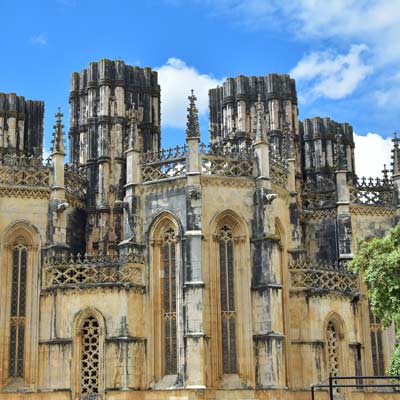
The huge columns rising out of the Unfinished Chapel
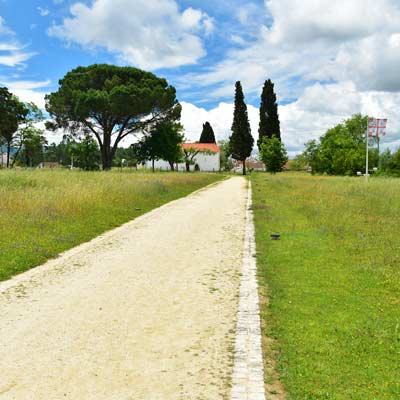
The Batalha de Aljubarrota was a resounding victory for Portugal
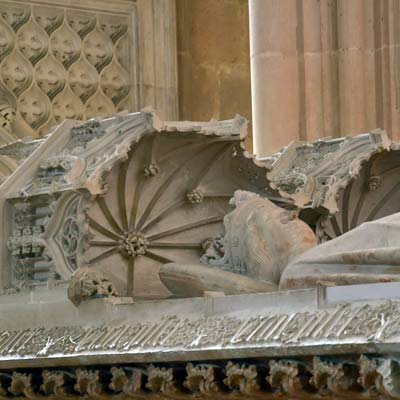
The Founders Chapel is the royal tomb for King john and his children
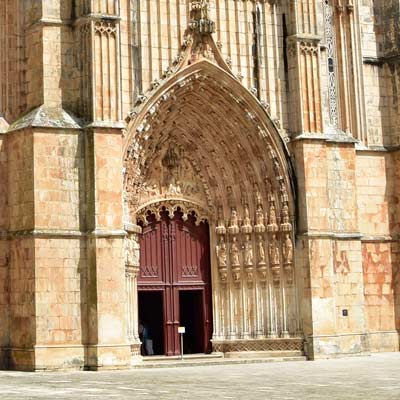
The decorative main portal to the church
How long to spend in Batalha?
A visit to Batalha is all about the Mosteiro da Batalha, and not much else. The actual site of the battlefield can be visited, along with the informative Batalha de Aljubarrota museum, but this is 3km out of the town. A typical visit to the monastery takes about two hours, while the Batalha de Aljubarrota Museum adds another hour to your day trip - details of both later in this article.
There is not much else to see in the town, and Batalha will only ever provide a short day trip. If for the day trip you have a rental car, Batalha could be combined with Alcobaça, Fatima, Obidos or one of the coastal towns (Nazaré, Peniche or São Martinho do Porto).
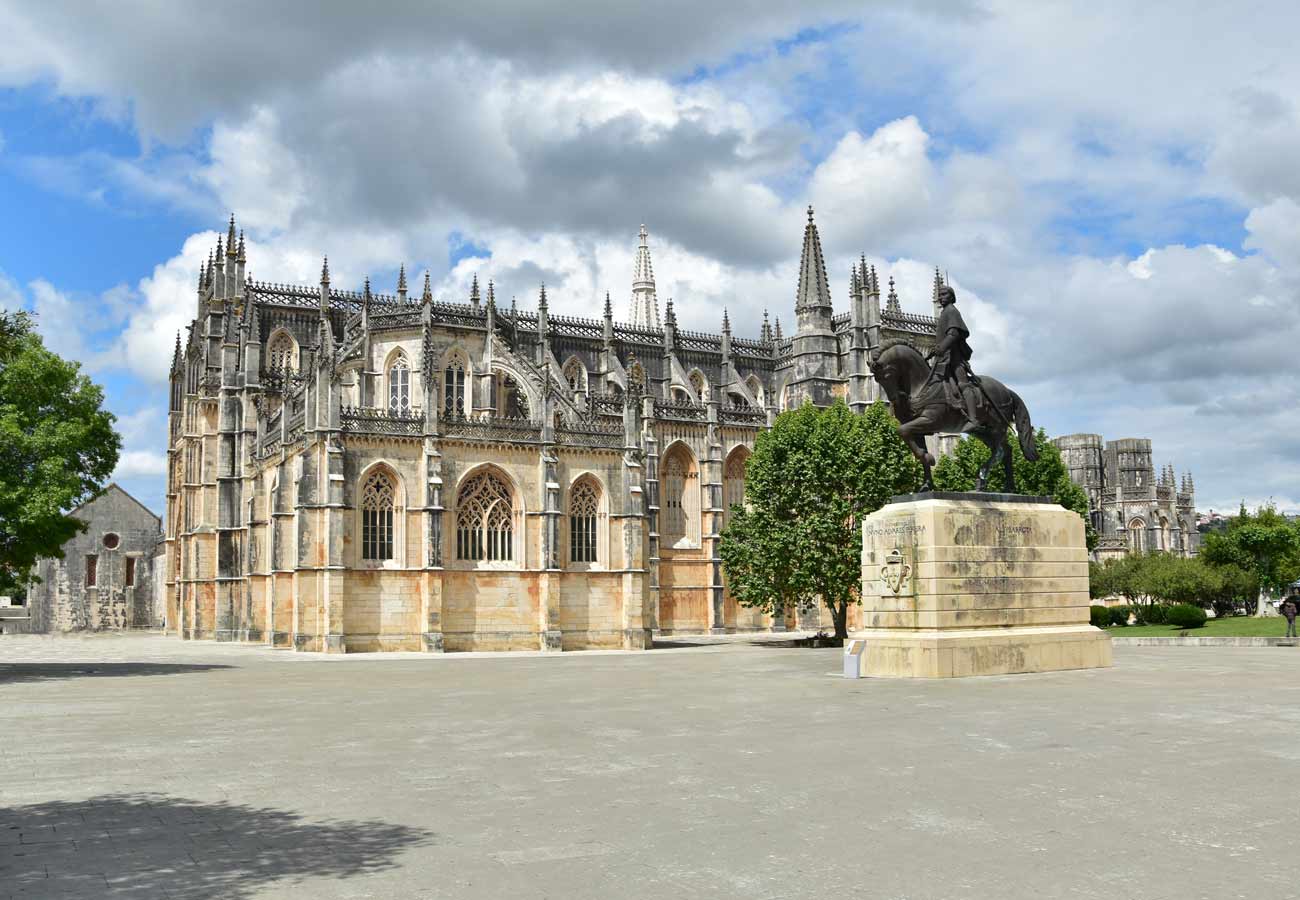
The Largo Do Mosteiro is usually filled with hundreds of tourists
Why spend a night in Batalha Portugal?
Batalha is a very likable town, which once all of the day trippers leave, has a calm and personable ambience. A stay in Batalha is ideal if you are seeking a relaxed destination, from which to explore the central Portugal region.
There are bus services from Batalha to Fatima, Alcobaça, Nazaré and Tomar, and it is possible to discover the region without the use of a rental car. Batalha has a high standard of hotels and restaurants, and the cost of accommodation is significantly less than Lisbon or popular resort towns.
Organised tours to Batalha
Batalha is a popular destination for organised tours (coach and small van) from Lisbon. These tours combine Batalha with visits to Obidos, Fatima, Alcobaça and Nazaré, leaving limited time to properly explore each location. Often less than an hour is provided for Batalha, which is only just enough time to see the main church (and not the cloisters or chapels).
For those wishing to fully explore both the monastery and the Batalha de Aljubarrota museum (highly recommended), planning an independent day trip is advisable.
Organised tours to Batalha are a good option if you are rushed for time and do not want the hassle of public transport. Some of the best tours provided by GetYourGuide.com which include Batalha and depart from Lisbon are:
• Fatima, Obidos, Batalha and Nazaré
• Batalha, Fatima, Nazare and Obidos
• Nazaré, Batalha Fátima, and Obidos
• Obidos, Fátima, Batalha and Alcobaça
The Mosteiro da Batalha
The Mosteiro da Batalha is one of the most impressive religious buildings of Portugal, and is a wonderful example of Gothic grandeur and Manueline extravagance. Highlights include the ornate Unfinished Chapel, the impressive height of the nave, and the tomb of King João I.
If you are interested in Portuguese history, religious architecture or just grand buildings, then you should visit the Batalha Monastery. For a full guide and image tour to the Mosteiro da Batalha please click here.
Insight: Tickets for the Batalha Monastery (€15) can be pre-purchased here to, avoid ticket queues
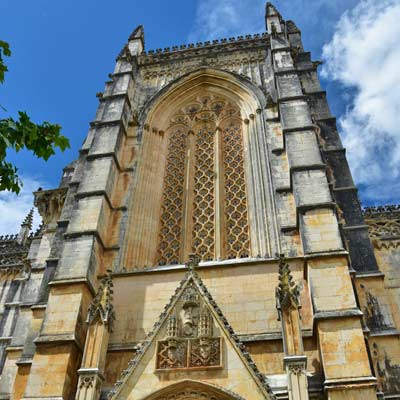
The medieval stain glass windows
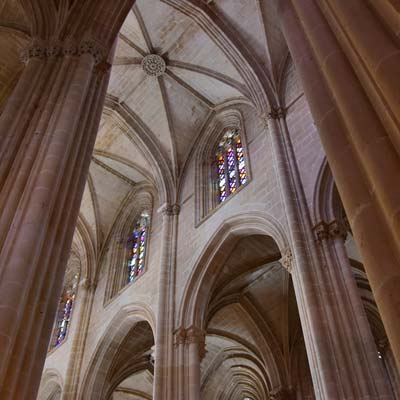
The church nave is 32m high, incredibly high for Gothic buildings
The Centro de Interpretação da Batalha de Aljubarrota museum
The Centro de Interpretação da Batalha de Aljubarrota (often shortened to just CIBA) is an excellent and informative museum, which has been constructed on the site of the battle of Aljubarrota.
The highlight of any visit is the 30-minute presentation (think of a slick Hollywood movie) that details the preceding events and the actual battle.
After the show, the battlefield can be wandered, and the tactical genesis of the Portuguese army can be fully appreciated. In the centre of the battlefield is the Capela de São Jorge.
The CIBA museum is 3km south-west from Batalha (GPS:39.639, -8.844), if you do not have a rental car a taxi is around €6 each way. The route to the museum follows a busy road and is not an enjoyable walk.
Tip: The presentations run 3-5 time a day, confirm the times at the tourist office before heading out to the museum.
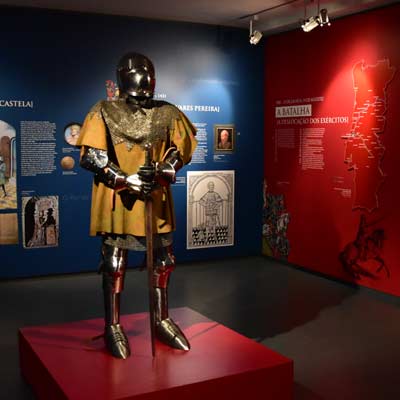
The CIBA museum has many informative displays
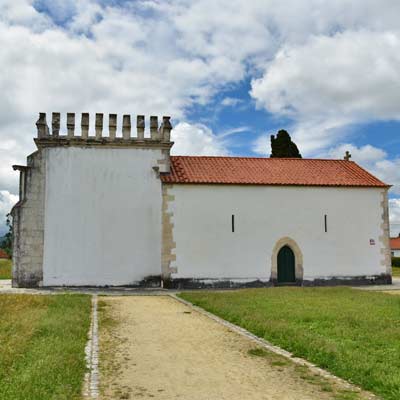
The Capela de São Jorge was built in the centre of the battle field
Other Sights in Batalha
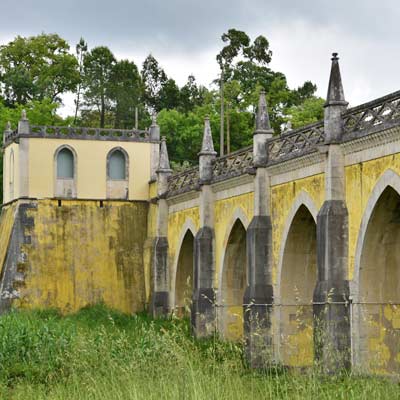
The Ponte da Boutaca bridge
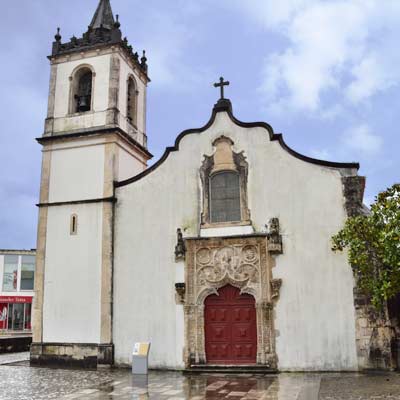
The Igreja Matriz da Batalha
Why was the battle of Aljubarrota so important?
The battle of Aljubarrota (1385) was a decisive victory for Portugal against the Castilians (the Spanish). It established King John and the House of Aviz as the ruling dynasty of Portugal.
If the Castilians had defeated the army of King João, Portugal would have been absorbed into Spain, and probably would have never had the strength to become an independent country.
The battle is even more remarkable in that the Portuguese forces were vastly outnumbered and that the complete rout of the Castilian army was in achieved in just one hour of fighting.
The spectacular victory must be attributed to Nuno Álvares Pereira, a brilliant tactician, who never lost a battle that he fought in over his entire life.
Batalha compared to other towns nearby
The Mosteiro da Batalha is better than the Mosteiro de Alcobaça, but as they are so close, they are often combined. Batalha is the smaller town but is the nicer place for a nights stay.
Fatima is the much-famed pilgrimage destination, but it has no historic centre or Portuguese character. The new Basilica and central plaza are designed for vast numbers of pilgrims and are rather plain. Unless you are deeply religious, or on a pilgrimage, Fatima can be fully seen in an hour.
Tomar has many more sights than Batalha, but if you are drawn to Tomar for the history and the Convento de Cristo, then you should also be visiting Batalha, even if it is for half a day. Obidos is a picturesque walled town but is often ruined by the sheer number of tourists.
Related guides: Obidos – Alcobaça – Nazaré - Lisbon day trip guide
Any recommendations?
Normally, we avoid recommendations and leave it to the review websites, but the Hotel Casa do Outeiro is outstanding (it won an award for the best 3-star hotel in Portugal), while the Restaurante Vintage serves amazing food. In general all of the tourist facilities of Batalha are of a high standard, including the helpful tourist information.
Travel to Batalha
From Lisbon to Batalha the bus services are operated by Rede Expressos, who are the main intercity coach company of Portugal. There is only a handful of daily services from Lisbon to Batalha but it is possible to visit as a day trip. The bus fares are €11.40/€20.40 (single/return) and the buses depart from the Sete Rios bus station in Lisbon (38.74145, -9.16693). The exact timetable and ticket sales can be found on their website:
www.
The bus services between Batalha, Fatima, Alcobaça and Nazaré are run by Rodotejo. For timetables, please see their website:
www.
Please take care when reviewing the timetables, as some of the services are seasonal and there are less departures at the weekend. Bus tickets are purchased from the driver Batalha is too small for a bus station and has a single bus stop (GPS: 39.65786, -8.82195) which is on the eastern side of the town, near the Intermarché supermarket.
Discover more of central Portugal with our guides


About this guide: I'm Philip Giddings. I live in Graça, Lisbon, with my Portuguese wife Carla, whose family have been Lisboetas for generations. I've been visiting Portugal since 2001 and writing the independent guides at MyPortugalHoliday.com since 2011, which is now my full-time work. Central Portugal was where Carla and I did much of our early exploring together, and twenty-five years on we still return to the same towns every year: the beaches at Nazaré and Ericeira with family in summer, the walled streets of Óbidos, and the quieter spots inland that most itineraries skip. Carla's extended family are spread across the region, from an aunt near Évora to good friends in Tomar, which gives me firsthand insight and people to check things with on the ground.
This site has 157 guides covering Portugal, from Coimbra down to the southern Alentejo. It takes no payment from tourist boards, tour operators, or attractions for inclusion, and is funded by affiliate commissions on tour bookings, disclosed on every page that contains them. Every practical detail (ticket prices, opening hours, bus and train routes, time-slot policies) is checked against the official sources and verified in person on the trips I make through the region across the year. Read my full story here.
 -
-


If you've found our content valuable, we'd welcome your support.
The digital publishing landscape has evolved significantly. As a small independent publisher, we face growing challenges. Search engines increasingly favour paid content over organic results, while AI-generated content often reproduces original work without attribution.
To support our work, please consider bookmarking this page (press Ctrl + D) for quick access. If you find an article helpful, we'd be grateful if you'd share it with friends on social media.
For specific questions, please see our Reddit community at r/LisbonPortugalTravel.
Should you notice any outdated or incorrect information, please contact us at [email protected]
Thank you for helping us continue to provide valuable content in an increasingly challenging digital environment.