MyPortugalHoliday.com
The best independent guide to Central Portugal
MyPortugalHoliday.com
The best independent guide to Central Portugal
Lisbon to Fatima by car, bus and train in 2026
Fátima sits 125 kilometres north of Lisbon, and for millions of people around the world it is a place of deep spiritual importance. The site where the Virgin Mary appeared to three child shepherds in 1917 has grown into one of the most visited pilgrimage destinations on earth, welcoming over six million visitors each year.
I will be honest: Fátima is not a town I would visit for its own sake. It lacks the historic charm and character of so many other Portuguese towns, and if you are travelling purely as a sightseer, you may find it a little stark. But for those who come as pilgrims, or simply out of genuine curiosity, it is a journey worth making well, and this guide is here to help you do exactly that.
A day trip from Lisbon is possible, but it is a full day. By car, the drive takes around an hour and fifteen minutes along the A1. By public transport, the bus is your best option, with Rede Expressos and FlixBus both serving the route in between one hour twenty and one hour forty minutes, and fares rarely exceeding €15.
I have been exploring Portugal since 2001 and, together with my Portuguese wife who is from Lisbon, know the central Portugal region well. We have made this journey from Lisbon to Fátima many times, and this guide draws on over twenty years of first-hand experience, along with her local knowledge.
Related articles: Guide to Fatima
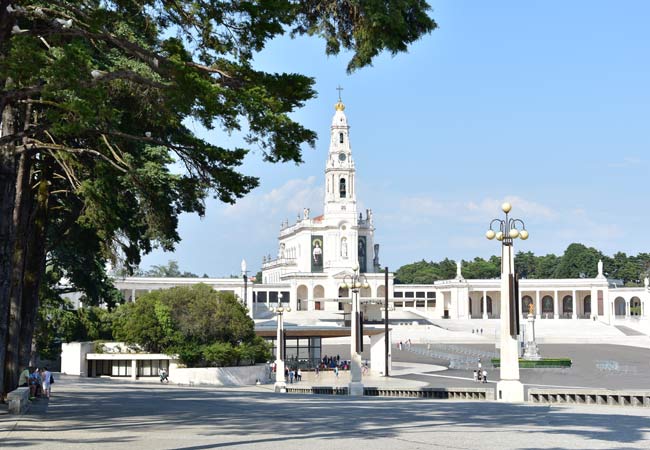
The Basílica da Santíssima Trindade
Lisbon to Fátima by bus
The bus is the option I would recommend to most travellers making this journey. It is affordable, reliable, and on a good service, only around ten minutes slower than driving. There are two companies operating this route, and between them they offer a good range of departure times throughout the day.
Rede Expressos is the national coach operator of Portugal and the more established of the two. Their coaches are modern, clean and comfortable, and the services run punctually. I have always found Rede Expressos buses to feel a little more spacious than the alternative, and their services tend to be slightly less crowded, though this does depend on the time of year and the specific departure you choose. www.rede-expressos.pt
FlixBus is the low-cost European operator that has transformed bus travel across Portugal over the past eight years. Their arrival has driven fares down significantly, and for budget-conscious travellers they are well worth considering. FlixBus coaches are modern and perfectly safe, though their business model depends on full buses, and you will often find their services busier and feel a little more cramped as a result. www.flixbus.pt/
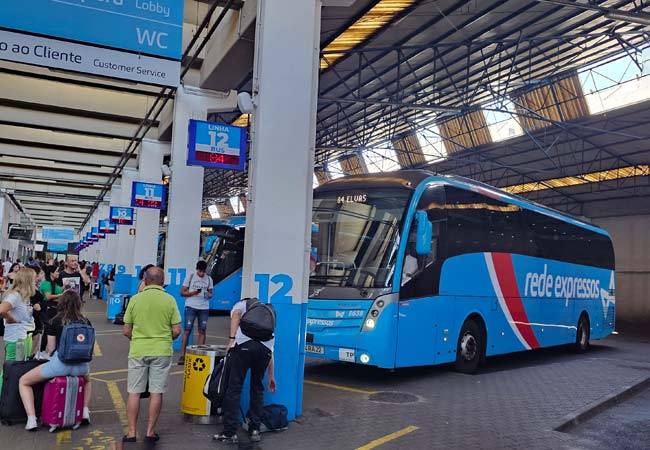
The Rede Expressos bus to Fatima in Sete Rios bus station – this is a busy and hectic bus station
Fares and booking
Both companies use dynamic pricing, meaning fares rise as the departure date approaches and as seats fill up. If you book a month in advance you can find tickets for as little as €4, which is remarkable value. Leave it to the last minute, however, and you will be paying closer to €15, which is broadly what fares were before FlixBus entered the market.
As a general rule, FlixBus tends to be slightly cheaper than Rede Expressos, but the difference is rarely dramatic. I would always recommend booking in advance regardless of which company you choose, particularly if you are travelling at weekends or around the 13th of the month when pilgrim numbers are high.
I strongly recommend booking directly through each company's own website rather than through third-party booking platforms. Booking directly saves on booking fees and makes any changes to your travel plans considerably easier to manage.
One important practical note: always check journey times carefully before purchasing. Most services complete the journey in between one hour twenty minutes and one hour forty minutes, but there is at least one Rede Expressos routing that takes a tedious one hour fifty minutes. It is worth the extra few seconds to confirm you are not booking that one.
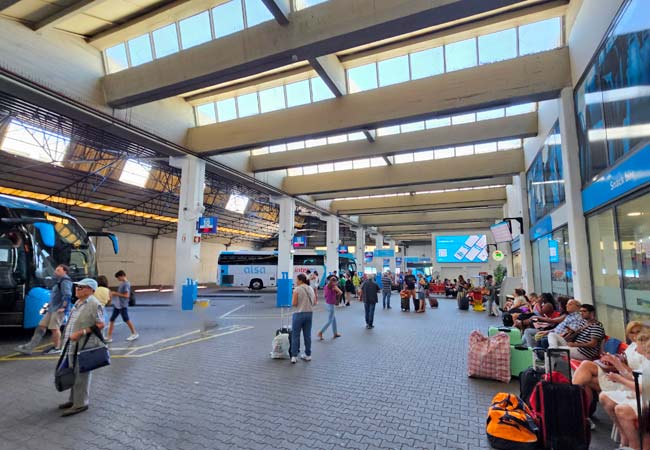
Me wandering the bus station looking for a café for a drink before the long jounrey
Journey times and frequency
There are up to 30 departures per day on weekdays between Lisbon and Fátima across both operators, so you have plenty of flexibility. At weekends the frequency drops, so it is worth checking timetables before you travel. That said, the most convenient morning departures do sell out, so if you have a specific time in mind, book ahead.
Each ticket carries an allocated seat number, and you are expected to sit in your assigned seat. All seats have seatbelts. If you are travelling with luggage, there is no need to worry: large bags are stored in the hold beneath the bus, and both operators handle this smoothly.
Departing from Lisbon
This is where the two companies differ practically. Rede Expressos services depart from Sete Rios bus station, which is the largest and busiest bus station in Lisbon. It is well connected to the city: take the blue metro line and alight at Jardim Zoológico, from where the station entrance is clearly signed and just a short walk. Inside you will find a large ticket office, a selection of cafes and snack bars, and clean toilet facilities (€0.50).This is a busy station handling over 500 daily departures, so I would suggest arriving at least fifteen minutes before your departure.
One thing to be aware of at Sete Rios: the departure screens only show the final destination of each service, which may not be Fátima if your bus is continuing further north. The bay number only appears around ten minutes before departure, so keep an eye on the screens as your time approaches. If you are unsure, do not hesitate to ask the driver.
FlixBus services depart from Oriente bus station, which is in the northeast of the city and connected to the red metro line. Oriente is a larger, more modern transport hub with train, metro and bus stations. I personally find it much easy to find the bus departure bays at Orient than at Sete Rios.
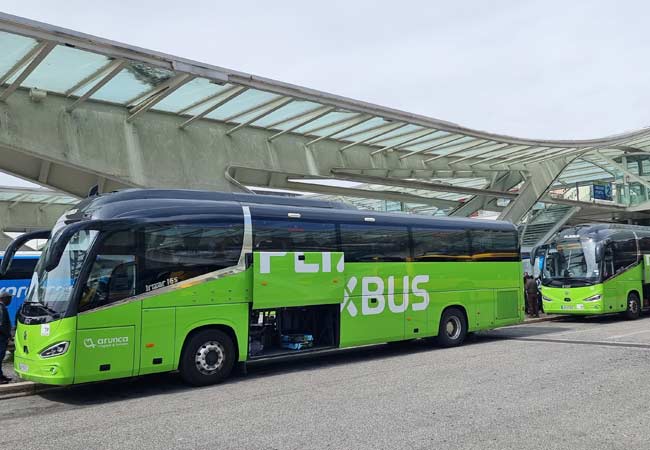
The distinctive green buses of Flixbus waiting at Oriente bus station
Arriving in Fátima
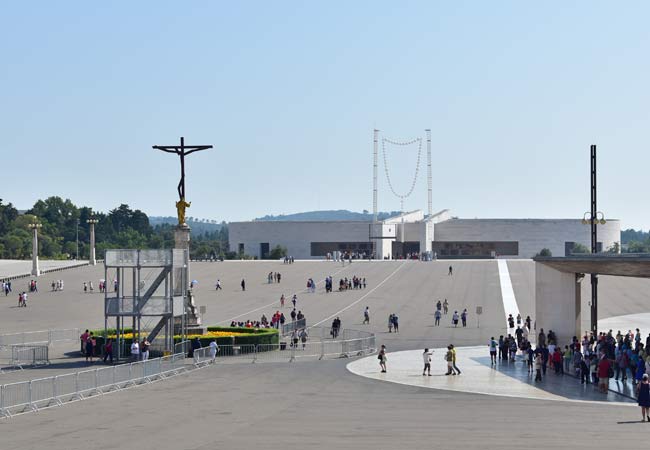
Both companies set down at the Terminal Rodoviário de Fátima (GPS: 39.631, -8.680 - link to google maps), which sits to the east of the town. From the bus station it is a comfortable 300 metre walk to the Santuário de Fátima, so you will be at the heart of the pilgrimage site within minutes of stepping off the bus.
Considering an organised tour?
If the idea of navigating buses and timetables feels like more effort than you want, an organised tour is well worth considering. A good guide does not just get you there: they bring the place to life, and the region around Fátima is rich with history and sights.
We have partnered with GetYourGuide for the past eight years and have found their Portugal tours to be excellent:
Lisbon to Fátima by car
Fátima sits just off the main A1 expressway, making it a straightforward drive of around one hour and fifteen minutes from Lisbon.
The A1 is a toll road, and the charges are higher than you might expect: €8.20 each way, or €16.40 for a return trip. That said, the road is fast and largely uncongested, with three service stations along the way. Most of the journey is unremarkable, but the final stretch rewards you with a climb through the steep hills of the Serra de Aire.
Leave the A1 at Junction 8, and you will find the large car parks surrounding Fátima just one kilometre past the toll booths. Parking is free, but availability varies enormously depending on when you visit. Weekends draw large numbers of Portuguese day-trippers, and the 13th of each month, the date Mary appeared to the shepherds, is particularly busy with pilgrims. Parques 11, 12 and 13 are the largest and best positioned for the town centre. Parque 4 is reserved for motorhomes and has shower and toilet facilities nearby.
If you have a car, make time to visit the village of Aljustrel, just 3km to the south-east, where the shepherds' houses have been preserved. The wider region also has much to offer: the historic city of Tomar, the hill fort at Ourém, and the monasteries at Batalha and Alcobaça are all within easy reach. On the coast, Nazaré and the sheltered bay at São Martinho do Porto are well worth the detour.
Related articles: Tomar – Batalha – Nazare
Train from Lisbon to Fátima
I will be direct: the train is not a viable option for travelling to Fátima, and I would strongly advise against it.
The main issue is that the station is not in Fátima at all, but in the remote village of Chão de Maçãs, 19 kilometres east of the town. Once you arrive at “Chão de Maçãs-Fátima” station you will find no reliable onward public transport to Fatima. You would be dependent on a taxi at €25 to €30, or an Uber at €15 to €28, in an area where finding either is far from guaranteed.
Chão de Maçãs-Fátima station in the middle of nowhere…
The station is listed as Chão de Maçãs-Fátima on the CP website, and it immediately appears when you search for Fátima. An unsuspecting traveller will see it appear and book without a second thought. I find the naming genuinely misleading: Fátima town is 19km away, the similarly sized town of Ourém closer at 9km away, and Tomar is only 10km away with its own rail connection. Fátima itself has none.
If you are determined to travel by train, CP operates services from Lisbon Oriente, the main departure point in the northeast of the city and connected to the red metro line. Direct intercity services take one hour and four minutes with fares from €15.70, while slower regional trains cost around €11.00 but add considerably to the journey time. Timetables and tickets are at
www.cp.pt
But honestly, take the bus.
Discover the best of Central Portugal with our guides


About this guide: I'm Philip Giddings. I live in Graça, Lisbon, with my Portuguese wife Carla, whose family have been Lisboetas for generations. I've been visiting Portugal since 2001 and writing the independent guides at MyPortugalHoliday.com since 2011, which is now my full-time work. Central Portugal was where Carla and I did much of our early exploring together, and twenty-five years on we still return to the same towns every year: the beaches at Nazaré and Ericeira with family in summer, the walled streets of Óbidos, and the quieter spots inland that most itineraries skip. Carla's extended family are spread across the region, from an aunt near Évora to good friends in Tomar, which gives me firsthand insight and people to check things with on the ground.
This site has 157 guides covering Portugal, from Coimbra down to the southern Alentejo. It takes no payment from tourist boards, tour operators, or attractions for inclusion, and is funded by affiliate commissions on tour bookings, disclosed on every page that contains them. Every practical detail (ticket prices, opening hours, bus and train routes, time-slot policies) is checked against the official sources and verified in person on the trips I make through the region across the year. Read my full story here.