MyPortugalHoliday.com
The best independent guide to Central Portugal
MyPortugalHoliday.com
The best independent guide to Central Portugal
Beyond Óbidos: Day Trips and Attractions of the Caldas da Rainha and Óbidos Region
Óbidos will enchant you within an hour, but it will not keep you there all day. That is the honest truth about one of Portugal's most photogenic towns: you can walk the walls, wander the cobbled streets, and soak up the atmosphere in a single morning, and still have half a day to fill. The happy discovery, once you step beyond the town gates, is that the surrounding region gives you plenty of ways to fill it.
Within 30 kilometres of Óbidos you will find historic monasteries, traditional salt pans, quiet fishing villages, dramatic cave systems, long Atlantic beaches, and Europe's largest Buddha garden. The variety is what makes this region so useful as a base. You might spend a morning watching the Atlantic crash against rocky headlands, an afternoon exploring underground chambers, and an evening in a seaside village where the fishing boats still outnumber the tourists. Whether you are passing through on a single day trip or staying in the Óbidos or Caldas da Rainha area, you will find far more to see than you have time for.
I have been exploring Portugal since 2001, and together with my Portuguese wife, I have returned to this stretch of coast many times over the years, often stopping here on the way north or simply for a day out from Lisbon. This guide shares what we have learned, covering the sights within easy reach of Óbidos, from the obvious highlights to the quieter corners worth a detour.
Related articles: Obidos Introduction – Day trip to Obidos
Sights of the Óbidos region
The area surrounding Óbidos offers a varied mix of attractions, from medieval monasteries and traditional salt pans to golden beaches and dramatic cave systems. The list below provides a quick overview of each sight, along with its distance from Óbidos. After the map there are full details of each of these sights.
• Lagoa de Óbidos (5km from Óbidos): A shallow coastal lagoon popular for watersports and birdwatching, with several beaches along its shores.
• Praia Fluvial dos Olhos de Água (55 km): A river beach known for its clear spring waters and surrounding pine forests, offering a refreshing alternative to coastal beaches.
• Mira de Aire Caves (70 km): Portugal's largest cave system, featuring impressive stalactites and stalagmites with guided tours available.
• Bacalhôa Buddha Eden (15 km): A vast oriental garden housing hundreds of Buddha statues, contemporary sculptures, and pagodas spread across 35 hectares.
• Passadiços da Foz do Arelho (15 km): A scenic coastal boardwalk offering views of the Atlantic Ocean, ideal for walking or watching the sunset.
• Salinas de Rio Maior (30 km): One of Portugal's oldest active salt pans, with traditional wooden structures and extraction methods dating back to the 12th century.
• Foz do Arelho Beach (15 km): A long stretch of golden sand where the Óbidos Lagoon meets the Atlantic, offering both calm lagoon waters and ocean waves.
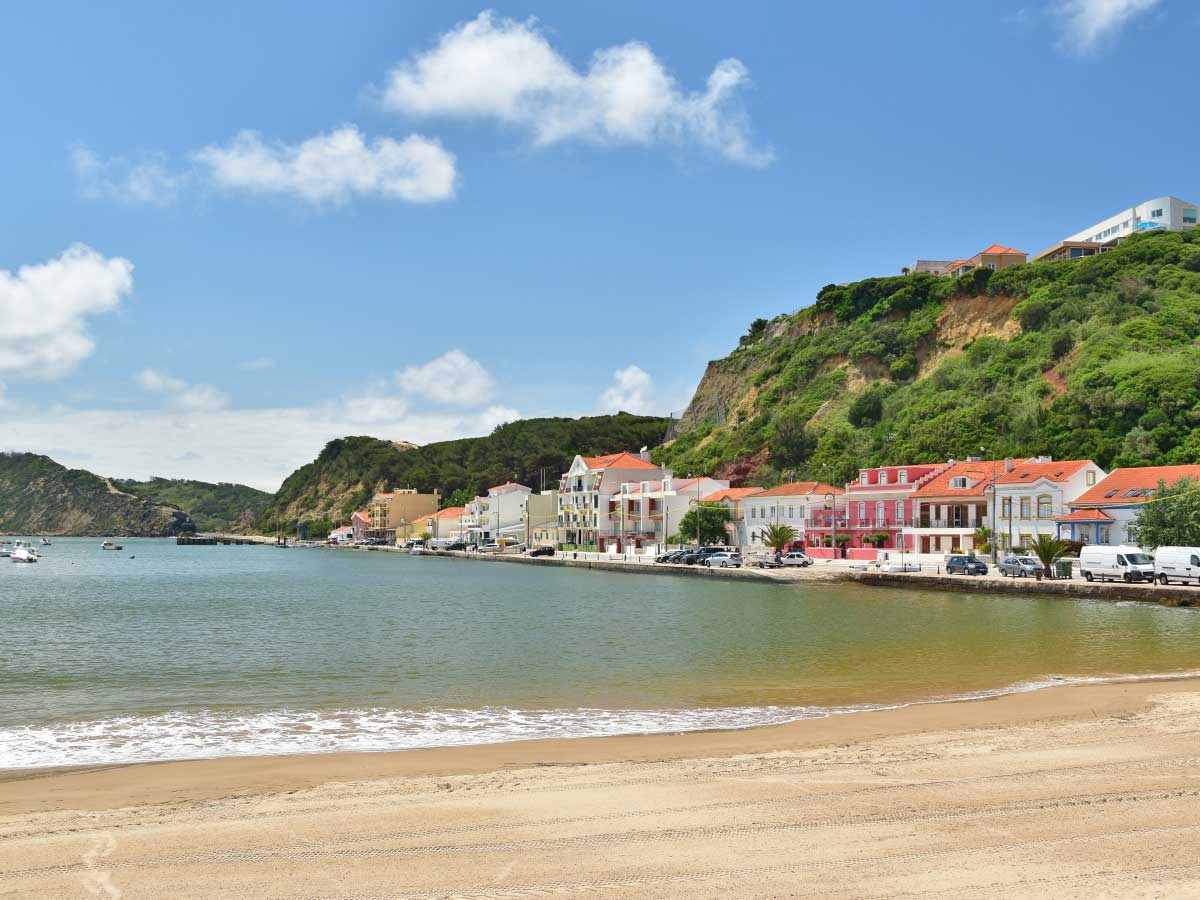
• São Martinho do Porto (20 km): A charming seaside town with a sheltered, scallop-shaped bay known for its calm waters and family-friendly beach.
• Peniche (30 km): A rugged fishing town and popular surfing destination, known for its historic fortress, working harbour, and ferry access to the Berlengas Islands. (Peniche guide)
• Cape Carvoeiro (35 km): A dramatic rocky headland with panoramic views of the Atlantic, featuring a lighthouse and unusual rock formations.
• Caldas da Rainha (10 km): A spa town founded in the 15th century, known for its thermal springs, colourful ceramic traditions, and daily fruit and vegetable market.
• Alcobaça Monastery (40 km): A UNESCO World Heritage Site and one of Portugal's most important medieval monasteries, renowned for its Gothic architecture and royal tombs.
• Nazaré (40 km): A picturesque fishing town famous for its enormous waves, traditional culture, and funicular connecting the beach to the clifftop district of Sítio. (Nazaré guide)
• Ilha do Baleal (25 km): A small rocky island connected to the mainland by a sandy isthmus, with beautiful beaches, surf spots, and a quiet village atmosphere.
• Berlengas Islands (boat from Peniche): A small archipelago and nature reserve around 10 km offshore, with crystal-clear waters, a historic fort, and diverse marine life. (Berlengas guide)
• Queijaria Flor do Vale (20 km): A traditional cheese producer offering farm tours, demonstrations of the cheese-making process, and tastings. Booking required.
• Batalha Monastery (65 km): A UNESCO World Heritage Site and masterpiece of Gothic and Manueline architecture, with intricate stonework and the tomb of Henry the Navigator. (Batalha guide)
• Praia do Salgado (45 km): A vast, unspoilt beach stretching for 12 km, known for its golden sands, powerful waves, and relative seclusion.
• Casa do Pão de Ló de Alfeizerão (22 km): An unassuming café and pastry shop selling exceptional Pão de Ló cake, a worthy detour when driving along the A8.
• Grutas de Santo António (70 km): An impressive cave system with colourful lighting and an underground lake, located near the larger Mira de Aire caves.
• Praia D'El Rey Golf Course (15 km): One of Portugal's top golf courses, this links-style 18-hole championship layout offers challenging play with views of the Atlantic and Berlengas Islands.
The map below shows the location of all the sights covered in this guide.
Legend: 1) Lagoa de Óbidos 2) Praia fluvial dos Olhos de Água 3) Mira de Aire Cave 4) Bacalhôa Buddha Eden 5) Passadiços da Foz do Arelho 6) Salinas de Rio Maior 7) São Martinho do Porto 8) Foz do Arelho Beach 9) Peniche 10) Cape Carvoeiro 11) Caldas da Rainha 12) Alcobaça Monastery 13) Nazaré 14) Ilha do Baleal 15) Batalha Monastery 16) Praia do Salgado 17) Grutas de Santo António 18) Praia D'El Rey Golf Course 19) Casa do Pão de Ló de Alfeizerão 20) Queijaria Flor do Vale
Below you'll find detailed descriptions of each attraction.
Have you considered an organised tour?
A guided tour can provide useful context on the history of Óbidos while removing the hassle of navigating limited public transport. Tours also offer the chance to visit several locations in a single day, making them an efficient way to explore the wider region. The following options are available through GetYourGuide.com:
Sights of the Óbidos and Caldas da Rainha region
Lagoa de Óbidos
The Lagoa de Óbidos is Portugal's largest coastal lagoon, stretching over 6 km² between Óbidos and the Atlantic Ocean. The shallow water stays calm even on breezy days, making it ideal for kayaking, paddleboarding, and windsurfing. Birdwatchers can spot over 200 species in the area.
The shoreline can be explored via hiking trails, or you can simply relax on the sandy beaches at Foz do Arelho. For lunch, the lagoon-side restaurants at Foz do Arelho serve clams and eels pulled straight from the water that morning. The lagoon's ecosystem is protected, making it an important site for both recreation and conservation.
Praia fluvial dos Olhos de Água (River beach)
Praia Fluvial dos Olhos de Água is a river beach named "Eyes of Water" after the natural springs that feed the Alviela River. The water comes directly from underground limestone aquifers and is noticeably colder than the sea, so brace yourself before getting in. On a hot summer's day, that initial shock is worth it.
The area has historical significance as a former water source for Lisbon, once forming part of one of Portugal's largest freshwater reservoirs. The beach is surrounded by greenery, providing natural shade and pleasant picnic spots.
Beyond the river beach, walking paths lead to geological formations such as the Sumidouro da Ribeira de Amiais and the Janela Cársica. Nearby, the Centro de Ciência Viva do Alviela offers the chance to learn about the local bat colony.
Mira de Aire Caves
The Mira de Aire Caves were discovered in 1947 when local residents investigated a small opening in the rock. They are the largest caves in Portugal, extending over 11 kilometres underground through limestone formations dating back to the Middle Jurassic period, around 150 million years ago.
Visitors can explore 600 metres of illuminated passages, descending to a depth of 110 metres. Highlights include the Great Hall, which stands 60 metres high and 45 metres wide, and the Red Room, where the walls are naturally stained crimson by iron oxide. Deep within the system, the Black River flows into a vast underground lake.
A guided tour takes about 45 minutes and includes a lift ride back to the surface. Bring a light layer: the constant 17°C feels refreshing in summer but cool after an hour underground. Tours run frequently in peak season, but arriving early avoids the larger coach groups. grutasmiradaire.com
Bacalhôa Buddha Eden
Bacalhôa Buddha Eden is Europe's largest oriental garden, spread across 35 hectares. Created by José Berardo in 2001 as a response to the Taliban's destruction of the Buddhas of Bamiyan in Afghanistan, the estate was constructed using 6,000 tons of marble and granite to create a sanctuary of peace.
A 21-metre white Buddha serves as the central focal point, surrounded by hundreds of statues, pagodas, and lakes. Other highlights include a cobalt blue replica of the Chinese terracotta army featuring over 650 soldiers, and the African Sculpture Garden, dedicated to the Shona people of Zimbabwe and their thousand-year tradition of hand-carving stone. The grounds also feature modern works by internationally known artists such as Alexander Calder and Fernando Botero, blending Eastern philosophy with contemporary Western art.
Allow at least two hours to explore properly; the site is larger than it first appears, and there are sculptures tucked into corners that reward wandering off the main paths. Wear comfortable shoes, as you will do a lot of walking.
bacalhoa.pt
Passadiços da Foz do Arelho
The Passadiços da Foz do Arelho is an 800-metre wooden boardwalk running along the clifftops north of Foz do Arelho beach, offering fine views of the Atlantic Ocean. The walkway provides safe access to previously inaccessible coastal areas and is a popular spot for watching the sunset. On clear days, the Berlengas Archipelago is visible in the distance. Several viewing platforms along the route offer good vantage points for observing local birdlife.
The walk takes around 20 minutes each way at a leisurely pace. Several viewing platforms along the route offer good vantage points for observing local birdlife, and the final platform has the best sunset views. Parking is available near the start of the boardwalk, though spaces fill up quickly on summer evenings.
Salinas de Rio Maior
The Salinas de Rio Maior are inland salt pans that have been in operation since the 12th century. Unlike most salt production sites, these pans are fed by a natural underground saltwater spring rather than seawater. The site consists of over 470 small, rectangular tanks where salt crystallises as the water evaporates.
Visitors can walk freely among the salt pans and observe traditional harvesting methods. The on-site museum explains the site's history and production process, though it is small and won't detain you long. The area also includes a small chapel and traditional wooden houses where salt workers once lived. A shop sells locally produced salt and related products; the flor de sal makes a good souvenir and keeps indefinitely.
The salt pans are particularly photogenic in late summer when production is at its peak. Entrance to the site is free, and an hour is enough to see everything.
São Martinho do Porto
São Martinho do Porto is a coastal town around 20 km north of Óbidos. Its main attraction is a shell-shaped bay that forms a natural harbour and creates one of the safest beaches in Portugal. The calm, warm waters make it a popular choice for families and those learning water sports.
The water is noticeably warmer than the open Atlantic, and on a calm day it feels almost like a large swimming pool. The seafront promenade is lined with restaurants and cafés serving fresh seafood and local specialities. The old town, with its narrow streets and traditional Portuguese architecture, is worth a short wander, though it won't take more than half an hour.
For panoramic views of the bay, head to the Miradouro de São Martinho do Porto. The viewpoint is a short but steep climb from the town centre, and the bay's distinctive shape is best appreciated from up here.
Cape Carvoeiro
Cape Carvoeiro is a rugged headland near the fishing town of Peniche. This dramatic stretch of coastline offers panoramic views of the Atlantic Ocean and the Berlengas Islands, with the Cabo Carvoeiro Lighthouse, built in 1790, still operational today.
The area is known for its rock formations, shaped by centuries of wind and waves. The most notable is the Nau dos Corvos (Crow's Ship), a jagged outcrop that takes a battering from the Atlantic swells. A coastal path runs along the clifftops, and on clear days you can see the Berlengas archipelago in the distance. I always allow around an hour to walk the full loop and take in the various viewpoints. The exposed headland can be windy even on calm days, so bring a layer.
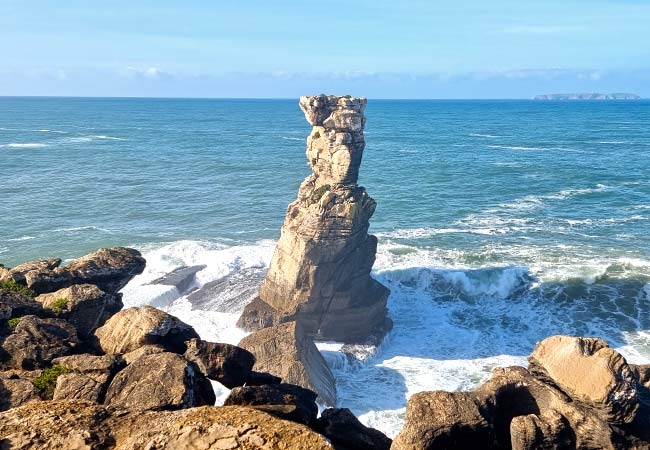
The Nau dos Corvos rock formation being battered by Atlantic waves
Alcobaça Monastery
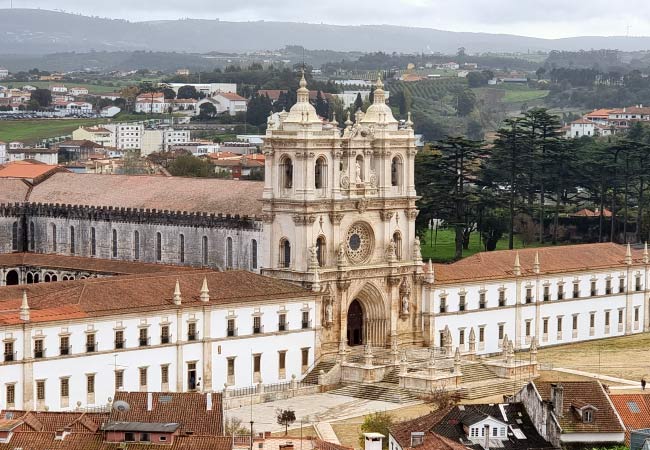
The Alcobaça Monastery is a UNESCO World Heritage Site and one of Portugal's most impressive medieval structures. Founded in 1153 by King Afonso Henriques, this Cistercian abbey is a fine example of early Gothic architecture.
The church, with its soaring nave and austere design, is the largest in Portugal. Inside are the ornate tombs of King Pedro I and Inês de Castro, whose tragic love story is central to Portuguese folklore. The detail in the carvings repays close inspection. The monastery's kitchen, with its massive chimney and water channel running through, is an impressive feat of medieval engineering.
The cloisters, chapter house, and dormitory offer a glimpse into monastic life. Allow at 90 minutes to see everything properly; it is easy to underestimate the scale of the complex.
Related articles: Alcobaça Monastery
Ilha do Baleal
Ilha do Baleal is a small island connected to the mainland by a narrow strip of sand, located just north of Peniche. Once a whaling outpost, it now attracts surfers and beachgoers with its consistent waves and laid-back atmosphere. The island has two main beaches: Praia do Baleal Norte and Praia do Baleal Sul, each offering different conditions depending on wind direction and swell.
If one side is choppy, the other is often calmer. The village itself is a compact cluster of narrow streets, whitewashed houses, and terracotta roofs, with a handful of restaurants, cafés, and surf shops. At the highest point sits the 17th-century Nossa Senhora dos Remédios Chapel, which offers views across the surrounding coastline. Several surf schools operate in the area, making Baleal a good base for beginners and experienced surfers alike. Parking can be tricky in summer; arrive early or be prepared to walk from the mainland side.
Personal opinion: I love this beach both for out of season surfing, or for bring family to for holidays.
Mosteiro da Batalha
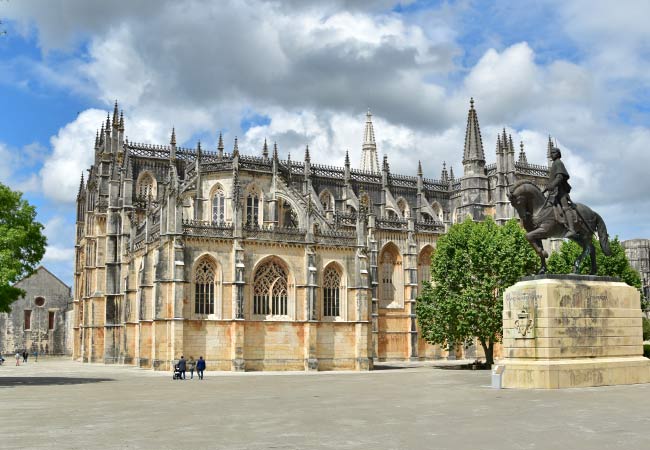
The Mosteiro da Batalha is a UNESCO World Heritage Site and a masterpiece of Gothic and Manueline architecture. Built to commemorate Portugal's victory over Castile at the Battle of Aljubarrota in 1385, the monastery took over a century to complete. The intricate stonework and soaring spires are striking, with the ornate Manueline-style Royal Cloister a particular highlight.
Inside is the Founder's Chapel, where King João I and his English wife Philippa of Lancaster are entombed. The Unfinished Chapels, an open-air octagonal structure, offer a fascinating glimpse into 15th-century construction techniques. The Chapter House contains the Tomb of the Unknown Soldier, with an eternal flame honouring Portugal's fallen. The monastery is best visited in the morning when the light catches the stonework and before the tour groups arrive.
Related articles: Guide to Batalha
Grutas de Santo António
The Grutas de Santo António were discovered in 1955 by workers chasing a bird into a crevice. This network of limestone caves, formed over 150 million years ago, is located near Alvados and covers 6,000 square metres. The largest chamber measures 80 by 50 metres and reaches a height of 43 metres.
Guided tours follow a 400-metre circuit, descending to a depth of 40 metres. Inside, you'll find impressive stalactites and stalagmites, including formations known as the Mammoth and the Mantle of the Virgin. Highlights include the Room of the Bats, where you can observe these creatures in their natural habitat, and the Fátima Room, featuring a stalagmite said to resemble Our Lady of Fátima. Dinosaur footprints are also preserved within the cave system. These caves are smaller and quieter than Mira de Aire, which suits those who prefer a less busy experience. A tour takes around 45 minutes. sogrutas.com
Caldas da Rainha
Caldas da Rainha was founded in the 15th century by Queen Leonor and is known for its thermal springs and distinctive pottery. The town's central square, Praça da República, hosts a lively daily fruit and vegetable market.
The market is busiest in the morning and winds down by early afternoon, so arrive before noon for the full experience. The town is particularly famous for its ceramics, especially the provocative pieces created by Rafael Bordalo Pinheiro. His work can be seen at the Bordalo Pinheiro Museum, while modern interpretations are available at the factory shop.
Those interested in art should also visit the José Malhoa Museum, which houses works by Portuguese naturalist painters. For a taste of local life, take a stroll through D. Carlos I Park or visit the thermal hospital, which remains in use today.
Personal opinion: I always recommend Caldas as a good base for exploring the region for friends who prefer a working town over a tourist-focused one.
Nazaré
Nazaré is a traditional fishing town that has gained worldwide fame for its extreme surfing conditions.
The town sits on a long sandy beach lined with former fishermen's houses, now home to hotels, restaurants, and beach shops. A funicular climbs to the Sítio headland, offering panoramic views of the coastline and access to the Sanctuary of Our Lady of Nazaré. From here, you can visit the São Miguel Arcanjo Fort, which houses a surf museum and provides a prime vantage point for watching surfers take on the waves.
At Praia do Norte, particularly in winter, some of the world's largest surfable waves can be seen. These enormous swells are generated by the Nazaré Canyon, an underwater geological formation that funnels and amplifies Atlantic swells as they approach the shore.
Personal Insight: If you visit hoping to see big wave surfing, I suggest having very flexible plans as the monster waves only appear when conditions align, typically between October and March.
Despite its surf fame, Nazaré retains a traditional character, with colourful fishing boats and seafood restaurants lining the main beach. The town gets busy in summer with Portuguese and international visitors seeking a classic beach holiday.
Related articles: Guide to Nazaré
Queijaria Flor do Vale
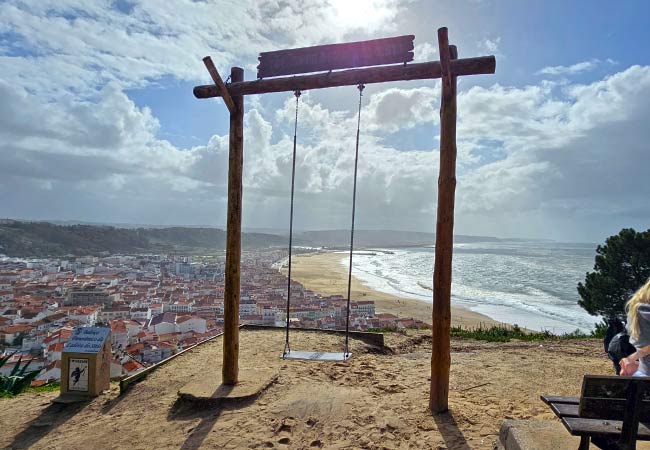
Queijaria Flor do Vale is a family-run dairy farm offering guided tours of the cow sheds and cheese factory, followed by a tasting of their artisanal cheeses. It's an engaging activity for all ages and provides an insight into traditional local food production. Tours must be booked in advance, ideally a few days ahead in summer. The visit takes around an hour and a half, and the shop sells their cheeses to take home.
flor-do-vale.pt/index
Peniche
Peniche is a working fishing town known for its world-class surf beaches and maritime heritage. The town is dominated by a 16th-century fortress, which served as a political prison during the Salazar dictatorship and now houses a museum. Down at the harbour, you can watch fishermen unload their daily catch.
The main draw for visitors is the beaches, particularly Supertubos, famous for its powerful tubular waves and host to international surfing competitions.
Related articles: Guide to Peniche
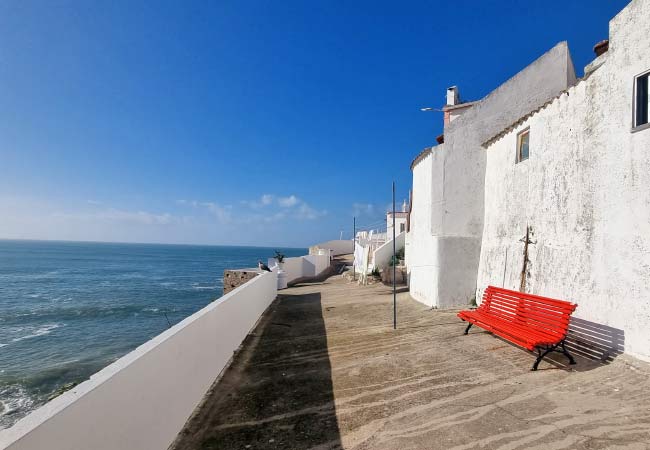
The traditional fishing houses of Peniche perched high on the cliffs
Casa do Pão de Ló de Alfeizerão
Pão de Ló de Alfeizerão is a regional delicacy: a sponge cake with a soft, creamy centre. Local tradition attributes its origins to the Monastery of Santa Maria de Coz, with the recipe said to have been shared by nuns fleeing religious persecution in the early 19th century. For an authentic taste, head to Casa do Pão de Ló de Alfeizerão, conveniently located just off the A8 motorway.
Praia do Salgado
Praia do Salgado is a vast, unspoilt beach stretching for around 8 kilometres between Nazaré and São Martinho do Porto. Known for its golden sands and powerful Atlantic waves, it is a popular spot for surfing and bodyboarding, yet remains less crowded than nearby Nazaré.
The beach is backed by cliffs that provide shelter from the wind and a striking backdrop. At low tide, small caves and rock formations can be explored. Praia do Salgado is well suited to long walks and offers a sense of the raw, undeveloped character of Portugal's Silver Coast.
Praia D'El Rey Golf Course
Praia D'El Rey Golf Course is consistently ranked among Europe's finest and offers a challenging round in a spectacular coastal setting. Designed by Cabell B. Robinson, this 18-hole championship course stretches along the Atlantic coast, measuring 6,405 metres from the back tees with a par of 73.
The layout features a mix of parkland and links-style holes, with ocean views on several. The seaside holes are particularly testing, with the wind adding an extra dimension to play. Facilities include a driving range, putting green, and a clubhouse with a pro shop and restaurant.
Discover more of Óbidos and central Portugal with our guides


A complete list of all of our guides to central Portugal
 -
-


If you've found our content valuable, we'd welcome your support.
The digital publishing landscape has evolved significantly. As a small independent publisher, we face growing challenges. Search engines increasingly favour paid content over organic results, while AI-generated content often reproduces original work without attribution.
To support our work, please consider bookmarking this page (press Ctrl + D) for quick access. If you find an article helpful, we'd be grateful if you'd share it with friends on social media.
For specific questions, please see our Reddit community at r/LisbonPortugalTravel.
Should you notice any outdated or incorrect information, please contact us at [email protected]
Thank you for helping us continue to provide valuable content in an increasingly challenging digital environment.