MyPortugalHoliday.com
The best independent guide to Portugal
MyPortugalHoliday.com
The best independent guide to Portugal
The 10 Best Castles in Portugal: History & Travel Guide
Portugal's landscape is defined by its military architecture, a direct result of centuries of conquest and resistance. From the fierce battles of the Reconquista against the Moorish Caliphates to the defence of sovereignty against Castile and Napoleon, these stone fortresses tell the story of a nation forged in battle. Today, they offer more than just military history; they provide a clear view of medieval life and architectural evolution.
This guide details sites with distinct characters, ranging from granite keeps in the north to red sandstone citadels in the south. You will find Moorish influences defined by horseshoe arches alongside massive Gothic towers built to secure independence. Whether you are interested in the Knights Templar or complex artillery fortifications, these castles serve as enduring physical records of the events that shaped modern Portugal.
Portugal's Castles: At a Glance
Here is a quick overview of the ten best castles in Portugal, that are covered in this guide.
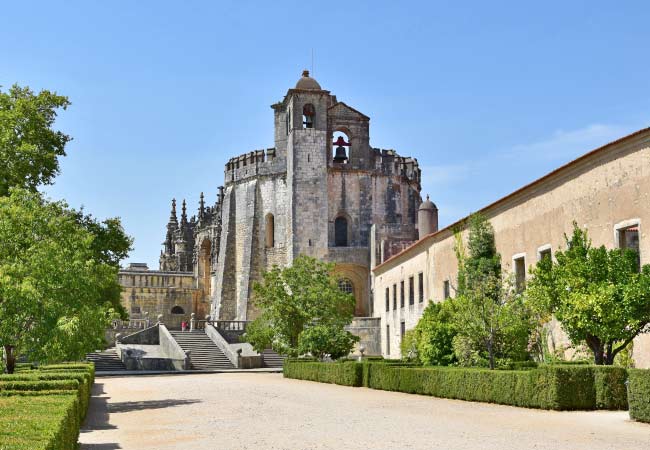
• Castelo de Tomar (The Templar Masterpiece): The headquarters of the Knights Templar and later the Order of Christ. It features the unique Charola and blends military function with religious symbolism.
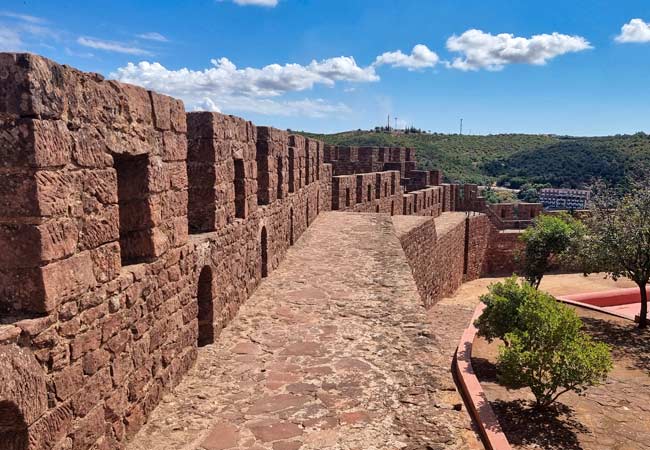
• Castelo de Silves (The Red Fortress): The supreme example of Islamic military architecture in Portugal. Built from red sandstone, it served as the Almohad capital of the Algarve.
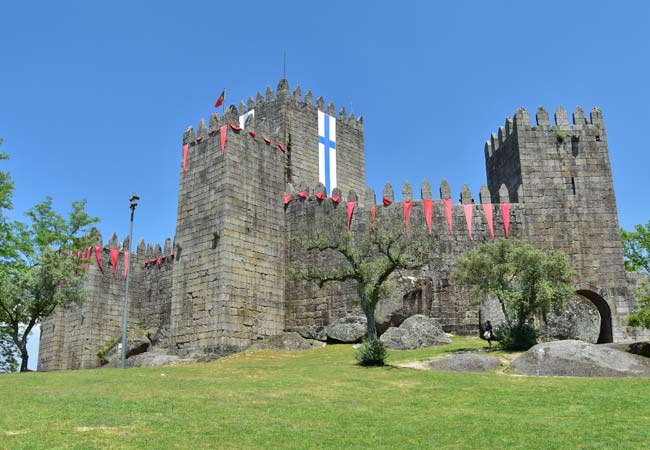
• Castelo de Guimarães (The Symbolic Cradle): A raw granite fortress in the Minho region. It is revered as the birthplace of Afonso Henriques and the Portuguese nation itself.
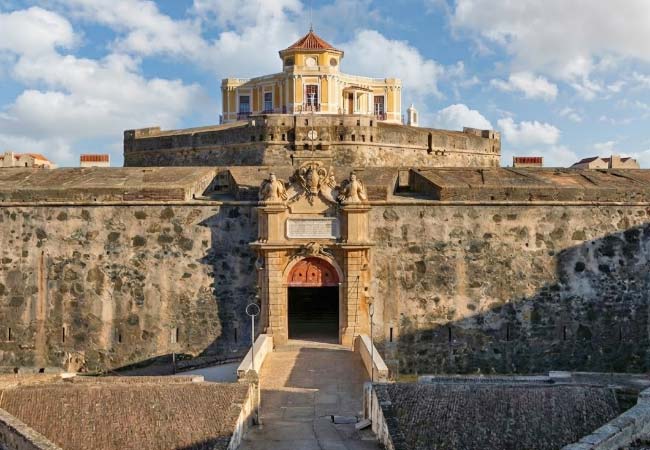
• Forte da Graça (The Peak of Artillery Engineering): Located in Elvas, this 18th-century star fort was designed to resist cannon fire. It represents the shift from medieval walls to modern geometric warfare.
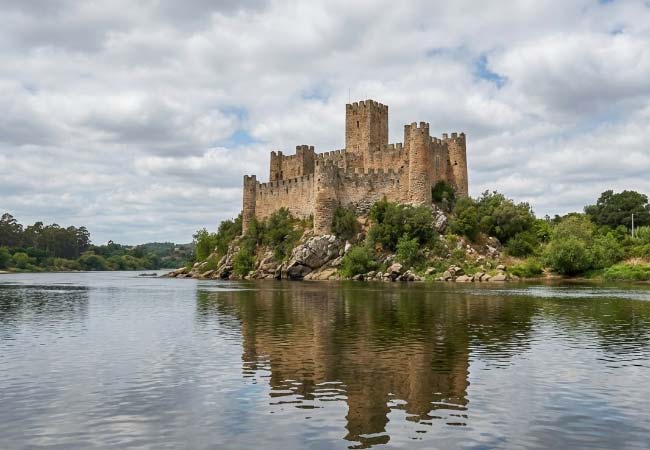
• Castelo de Almourol (The River Castle): A romantic Templar fortress situated on a rocky islet in the middle of the Tagus River, originally built to defend the Christian border.
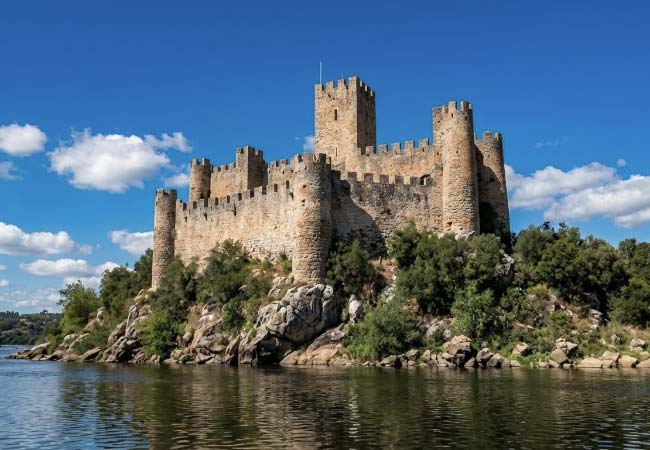
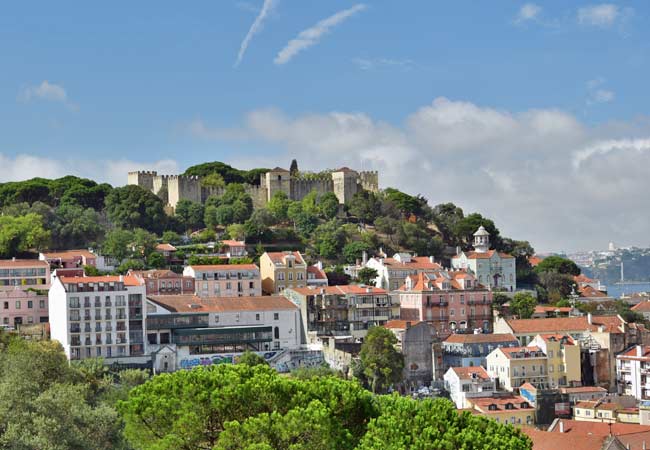
• Castelo de São Jorge (The Urban Citadel): Crowning the capital city of Lisbon. This Moorish-founded complex offers the best views of the city and the Tagus Estuary.
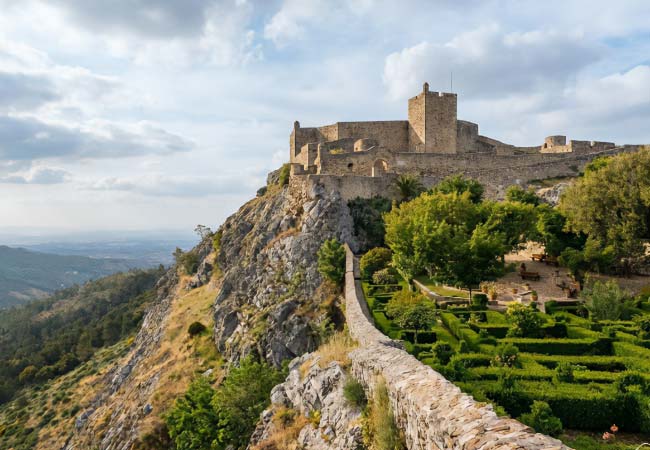
• Castelo de Marvão (The Eagle's Nest): An unconquerable border fortress perched on a high quartzite crag. It offers commanding 360-degree views into Spain.
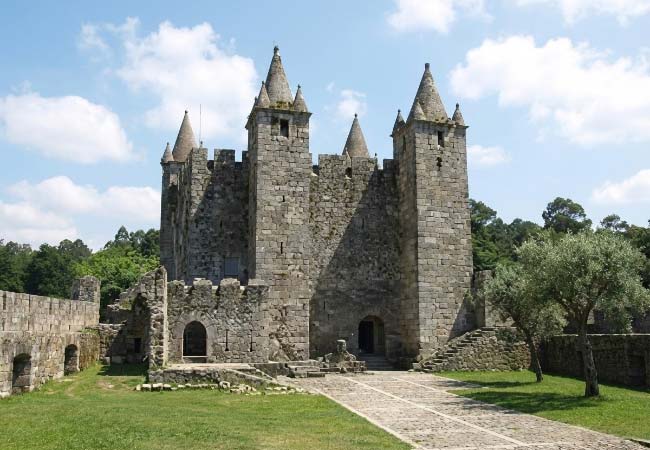
• Castelo de Santa Maria da Feira (The Architectural Anomaly): Unique among Portuguese castles for its conical towers and fantasy-like appearance, bridging the gap between fortification and palace.
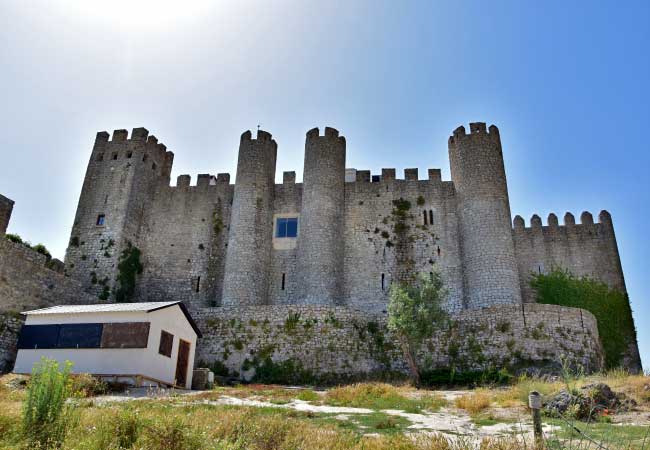
• Castelo de Óbidos (The Walled Town): The quintessential medieval village. The castle walls completely enclose the town, which was historically owned by the Queens of Portugal.
• Castelo de Bragança (The Northern Watchtower): A remote frontier defence in the extreme northeast. It features an exceptionally preserved Gothic keep and a Romanesque civic hall.
The location of these 10 castles can be seen in the map below:
Legend: 1) Castelo de Tomar 2) Castelo de Silves 3) Castelo de Guimarães 4) Forte da Graça 5) Castelo de Almourol 6) Castelo de São Jorge 7) Castelo de Marvão 8) Castelo de Santa Maria da Feira 9) Castelo de Óbidos 10) Castelo de Bragança
Detailed guide to Portugal’s finest castles
1 - Castelo de Tomar (The Templar Stronghold)
Location: Tomar, Central Portugal
Primary Era: 12th–16th Century
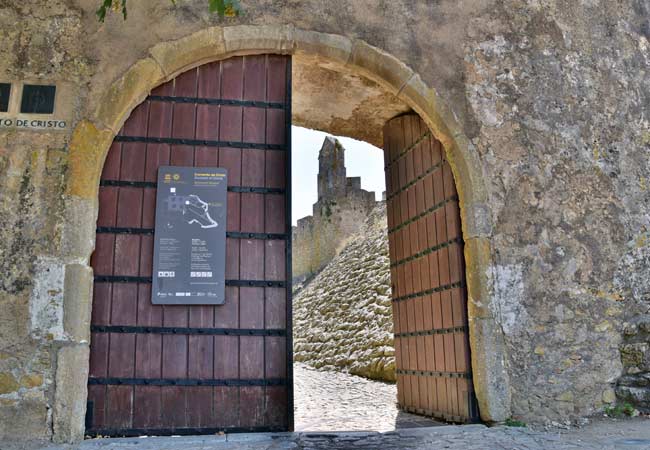
Founded in 1160, by Gualdim Pais, Grand Master of the Knights Templar in Portugal, Tomar served as the religious orders headquarters during the Reconquista. When the Pope suppressed the Templars in 1312, King Dinis cleverly rebranded them as the "Order of Christ," transferring all assets including Tomar to this new entity. The castle later became the spiritual and financial engine of the Age of Discovery under Prince Henry the Navigator, who resided here.
Tomar features military innovations brought from the Crusades. The distinctive alambor (a sloped thickening at the base of walls) prevented mining and deflected dropped stones outward into attacking infantry. At the castle's heart stands the Charola, a 16-sided polygonal church modelled on Jerusalem's Holy Sepulchre, designed so knights could attend mass in full armour, symbolizing the fusion of monk and warrior.
The castle withstood a massive 1190 siege by the Almohad Caliph. Legend says the outnumbered Templars held the gate through sheer ferocity - the entrance is still called "Porta do Sangue" (Gate of Blood) because blood allegedly flowed down the stone steps.
2 -Castelo de Silves (The Red Fortress of the Algarve)
Location: Silves, Algarve
Primary Era: 8th–13th Century (Almohad)
During the Islamic period, Silves (then called Xelb) was a thriving cultural capital and the castle served as the citadel of this power. It changed hands violently and repeatedly - conquered by Sancho I in 1189 with passing Crusaders noted for their brutality, lost again to the Moors in 1191, and finally secured by Christians in 1242.
Silves stands out for its vivid appearance, constructed from "Grés de Silves," a local red sandstone that gives the fortress a blood-orange colour, contrasting sharply with the whitewashed town below. The castle covers 12,000 square meters defended by 11 square towers - a hallmark of Almohad military architecture.
The fortress contains two monumental cisterns crucial for surviving sieges. The Cisterna da Moura, a vaulted room supported by columns, holds over a million liters of water. According to legend, a Moorish princess haunts this cistern, sailing a silver boat with golden oars on midsummer nights, lamenting her lost city. The Cisterna dos Cães drops 60 meters into the water table, named after the practice of throwing dogs into the pit to find secret passages - they never returned.
3 - Castelo de Guimarães
Location: Guimarães, Minho
Primary Era:10th–12th Century
The Castelo de Guimarães sits at the heart of Portuguese national mythology. Built in the 10th century by the immensely wealthy Countess Mumadona Dias to protect a monastery from Viking raiders and Moorish armies, this fortress would become the birthplace of a nation.
Its defining moment came in the 12th century when Afonso Henriques was born within these walls in 1111 and would become Portugal's first king. The castle served as his operational base for rebellion against his own mother and her Galician lover, culminating in the Battle of São Mamede in 1128 - effectively Portugal's war of independence.
Built of local granite, the castle forms a distinctive shield shape that seems to symbolize its defensive purpose. The 27-meter central keep dominates the complex - a massive square tower added by King Dinis in the 13th century, robust and unadorned, prioritizing raw strength over aesthetics. Eight crenellated towers puncture the curtain walls, designed to provide flanking fire against attackers. The lack of windows or decoration confirms its role as a strictly military installation.
Just outside the walls stands the small Romanesque chapel of São Miguel, where Afonso Henriques was baptized. The chapel floor is paved with gravestones of noble warriors, emphasizing the medieval connection between faith and sword.
4 - Forte da Graça (The Star of Elvas)
Location: Elvas, Alentejo
Primary Era: 18th Century (1763–1792)
While medieval castles were built to stop men with swords and ladders, Forte da Graça was built to stop artillery. Sitting on Monte da Graça hill overlooking the strategic border town of Elvas, it was designed by Wilhelm, Count of Lippe, a German military genius brought in to reform the Portuguese army. The fort played crucial roles in the War of the Oranges (1801) and the Peninsular War against Napoleon.
Considered one of the most powerful bastion forts in the world, Forte da Graça is built in a star shape with pentagonal bastions. This geometry eliminates blind spots - every inch of the perimeter can be covered by cannon or musket fire from another section. The fort has three defensive lines: outer ravelins, then the main ditch, then the inner magistral line. At the center rises the Governor's House, an opulent Rococo/Neoclassical palace sitting inside a killing machine.
The fort was designed as a self-sustaining city with massive cisterns collecting rainwater to supply thousands of soldiers even if the Elvas aqueduct was cut. So impregnable it was never successfully stormed, its construction took 30 years and cost so much that King Joseph allegedly exclaimed the walls must be made of gold.
5 - Castelo de São Jorge
Location: Lisbon (Alfama/Castelo District)
Primary Era: 11th Century (Moorish) / 12th-14th Century (Royal)
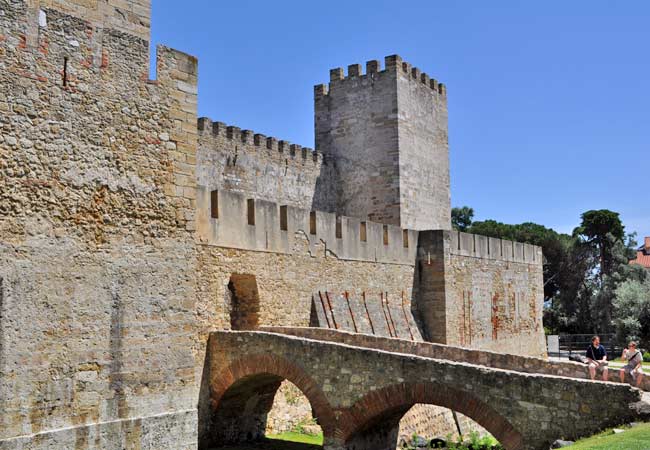
The Castelo de São Jorge crowns Lisbon, with archaeological evidence showing occupation since the Iron Age, followed by Phoenicians, Romans, and Visigoths. The current footprint is largely Moorish - it served as the Alcáçova (citadel) of Muslim governors until Afonso Henriques conquered Lisbon in 1147 with Second Crusade help. The castle functioned as the Royal Palace until the 16th century when Manuel I moved the court to the riverside, leaving the castle to decline.
The castle was heavily restored in the 1940s under Salazar to celebrate national heritage, meaning some "medieval" features are actually 20th-century reconstructions. It features a barbican protecting the main gate and 11 towers, most notably the Torre de Ulysses which housed royal archives for centuries. The archaeological area reveals Lisbon's layered history, including ruins of the Moorish quarter destroyed to build the Royal Palace.
The most famous legend involves Martim Moniz during the 1147 siege. Seeing a small door closing, he threw his body into the gap, being crushed but preventing it from shutting, allowing Portuguese troops to storm the castle. This Porta de Martim Moniz is marked today.
6 - Castelo de Almourol (The Island Sentinel)
Location: Vila Nova da Barquinha, Tagus River
Primary Era: 12th Century
Almourol is the archetype of the romantic medieval castle, sitting on a rocky islet in the middle of the Tagus River. Originally a Lusitanian castro and later a Roman fort, it was rebuilt in 1171 by Gualdim Pais (the builder of Tomar) as part of the "Linha do Tejo" - a series of castles designed to stop Moorish incursions from crossing into newly secured Christian lands to the north.
The castle adapts perfectly to the island's uneven terrain. The 20-meter-high rectangular keep sits on the highest point, aligned with the island's spine. The walls follow the cliff edges, making the castle appear to grow organically from the stone, with nine circular towers set along them - round towers deflect projectiles better than square ones, a typical Templar feature. An inscription over the main gate dates construction precisely to 1171, providing one of the clearest markers of Templar activity in the region.
7 Castelo de Marvão (The Eagle's Nest)
Location: Marvão, Alentejo
Primary Era: 9th–13th Century
Marvão is defined by its inaccessibility. Perched at 862 meters on the Serra de São Mamede's highest crest, it acts as a natural watchtower over the Spanish border. It was founded in the 9th century by Ibn Marwan al-Jilliqi, a Muladi (Iberian convert to Islam) who rebelled against the Emir of Cordoba to establish an independent statelet here. The castle became Portuguese in the 12th-13th centuries and proved vital during the 17th-century Restoration Wars.
The castle fuses with the rock, using natural quartzite crags as part of its defensive perimeter. To reach the castle proper, attackers would have to breach the village walls, navigate narrow streets, then breach the castle gate. Marvão contains one of Portugal's most impressive cisterns - 10 meters high and essential for a fortress on a dry mountain peak. Unusually for a harsh military post, formally maintained gardens within the castle walls offer a moment of softness amidst the stone.
The steep, winding drive up leads to a pristine village inside the walls with white houses and Manueline windows. The 360-degree view is the primary attraction - Spain to the east, Alentejo plains to the south and west.
8 - Castelo de Santa Maria da Feira (The Fantasy Fortress)
Location: Santa Maria da Feira, Aveiro District
Primary Era: 11th–16th Century
This castle marks a pivot point in the Reconquista. Built on the site of a local deity temple and Roman castro, it served as 11th-12th century headquarters for the Terra de Santa Maria administrative region and base for the Portuguese barons' revolt against León. However, its current form comes from the 15th-century Pereira family, who transformed it from rugged fort to palatial residence.
Santa Maria da Feira looks more like a Disney or central European castle than a typical square Iberian fort. The defining keep is flanked by four circular turrets with conical roofs, giving it a rare verticality and elegance for Portugal. The castle captures the transition from Gothic defensive walls to Renaissance palatial comfort - the Great Hall features large fireplaces and windows that would have been dangerously vulnerable in earlier eras but acceptable by the 15th century.
9 - Castelo de Óbidos (The Queen's Town)
Location: Óbidos, Leiria District
Primary Era: 12th–14th Century
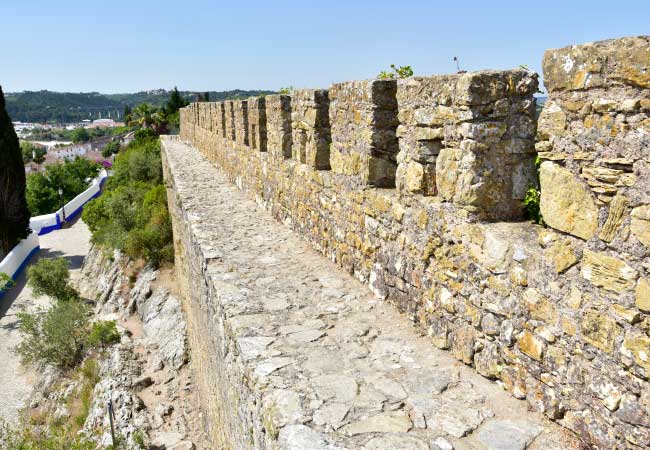
Óbidos is the "Vila das Rainhas" (Town of the Queens). After King Dinis gifted the town to Queen Isabel in 1282, it became the personal property of Portuguese queens until the 19th century. The castle has Roman and Moorish foundations (the name comes from Latin oppidum, meaning citadel), but the current layout is medieval Portuguese.
The castle forms part of a unified defence system with the town walls stretching 1,565 meters, crenellated and high, completely enclosing the whitewashed town. The castle was heavily modified in the 16th century to serve as a palace, with Manueline windows added. In the 1950s, the keep and palace were converted into Portugal's first Pousada (state-run historic hotel), saving the building from ruin but restricting interior access to hotel guests.
Óbidos is known for its betrayal during the 1383-1385 crisis, when the castle sided with the Spanish/Castilian faction, leading to a siege by the future King John I.
Castelo de Bragança (The Northern Sentinel)
Location: Bragança, Trás-os-Montes (North East)
Primary Era: 12th–15th Century
Bragança sits in the extreme northeast "Terra Fria" (Cold Land), key to holding the border against León. The current structure dates largely from King John I's reign (early 15th century). It's the ancestral seat of the Dukes of Bragança, who became Portugal's ruling dynasty from 1640 to 1910.
The remarkably preserved Cidadela is a "town within a town." The Torre de Menagem, one of Portugal's finest Gothic keeps at 33 meters tall, features machicolations through which defenders could drop rocks or boiling oil. Uniquely, the castle grounds contain the Domus Municipalis, a pentagonal Romanesque building that served as the city council chamber. Built over a cistern, it's the only surviving example of Romanesque civic architecture in the Iberian Peninsula.
Discover the best of Portugal with our guides


About this guide: I'm Philip Giddings. I live in Graça, Lisbon, with my Portuguese wife Carla, whose family have been Lisboetas for generations. I've been visiting Portugal since 2001 and writing the independent guides at MyPortugalHoliday.com since 2011, which is now my full-time work. Central Portugal was where Carla and I did much of our early exploring together, and twenty-five years on we still return to the same towns every year: the beaches at Nazaré and Ericeira with family in summer, the walled streets of Óbidos, and the quieter spots inland that most itineraries skip. Carla's extended family are spread across the region, from an aunt near Évora to good friends in Tomar, which gives me firsthand insight and people to check things with on the ground.
This site has 157 guides covering Portugal, from Coimbra down to the southern Alentejo. It takes no payment from tourist boards, tour operators, or attractions for inclusion, and is funded by affiliate commissions on tour bookings, disclosed on every page that contains them. Every practical detail (ticket prices, opening hours, bus and train routes, time-slot policies) is checked against the official sources and verified in person on the trips I make through the region across the year. Read my full story here.